InterCity 225 Story
Follow the fascinating evolution of the InterCity 225 in our illustrated timeline, which charts all the key events during the life of one of Britain's most iconic trains, from ambitious beginnings in the mid-1980s to the present day.
July 1984
The government approves electrification of the East Coast Mainline (ECML) from London to Leeds and Edinburgh. The business case is based on a fleet of 125mph Class 89 Co-Co electric locomotives and Mark 3 coaches. British Rail (BR) is, however, separately exploring the concept of a ‘fixed formation’ train to offer many of the benefits provided by the ill-fated Advanced Passenger Train (APT). This becomes known as InterCity 225 and its locomotive is the Class 91, a Bo-Bo design capable of up to 140mph.
February 1985
BR sidelines the Class 89 in favour of the InterCity 225 concept for the electrified ECML. InterCity 225, with trains formed of a Class 91 plus newly designed Mark 4 coaches and a Driving Van Trailer (DVT), is seen as offering a step change in the attractiveness of services for customers. The higher speed of the Class 91 coupled with reduced track wear from having fewer wheels on the rails clinches the conversion case from the Class 89.
February 1986
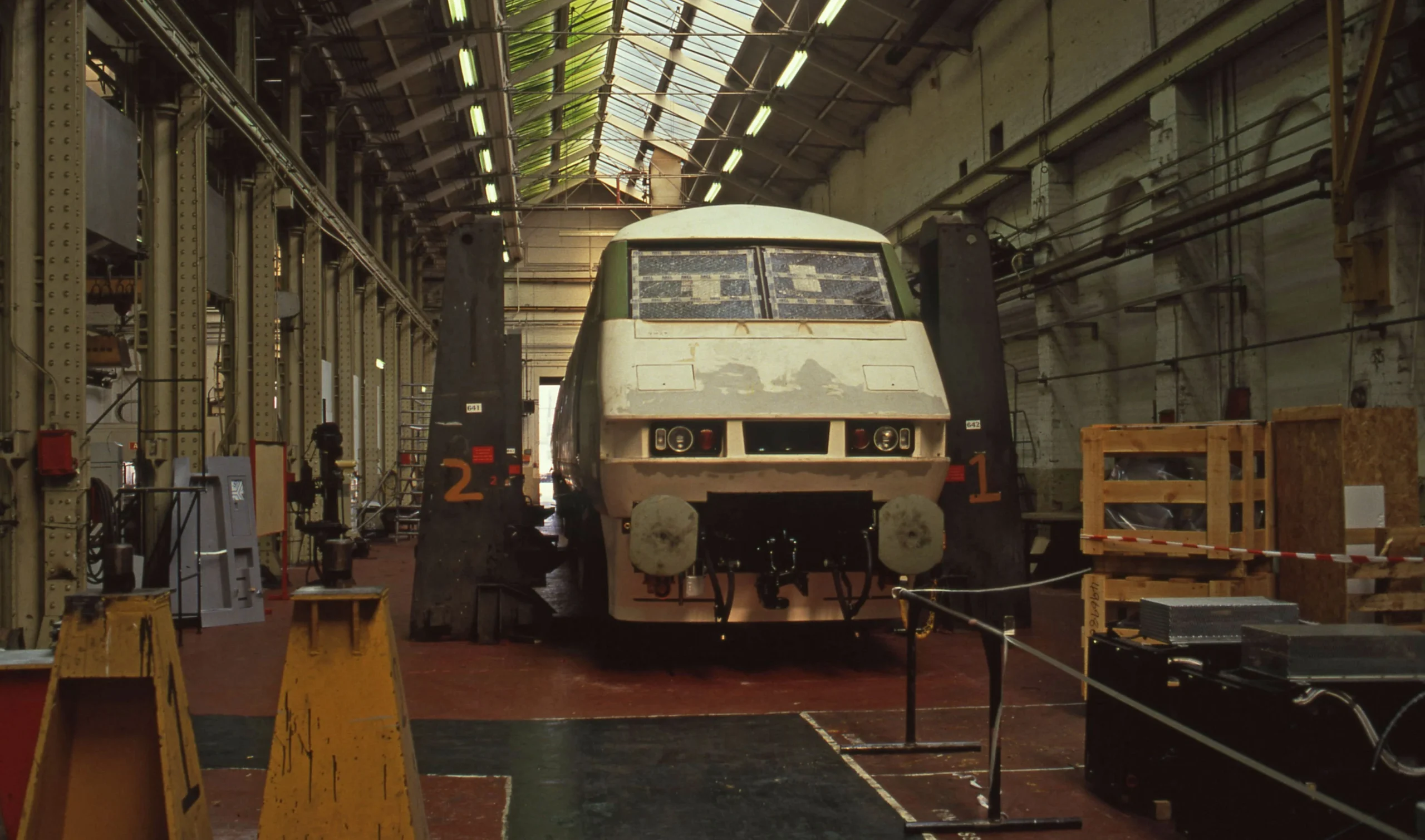
GEC Transportation Projects Limited (GEC-TPL) wins the contract to design and build 31 Class 91 locomotives, with British Rail Engineering Limited (BREL) responsible for their assembly and the installation of components. A production line is set up at BREL’s Crewe Works, with the rollout of the first locomotive targeted for Sunday 14th February 1988.
Picture: 91023 under construction at BREL’s Crewe Works on Saturday 21st July 1990. CHRIS MILNER
December 1986
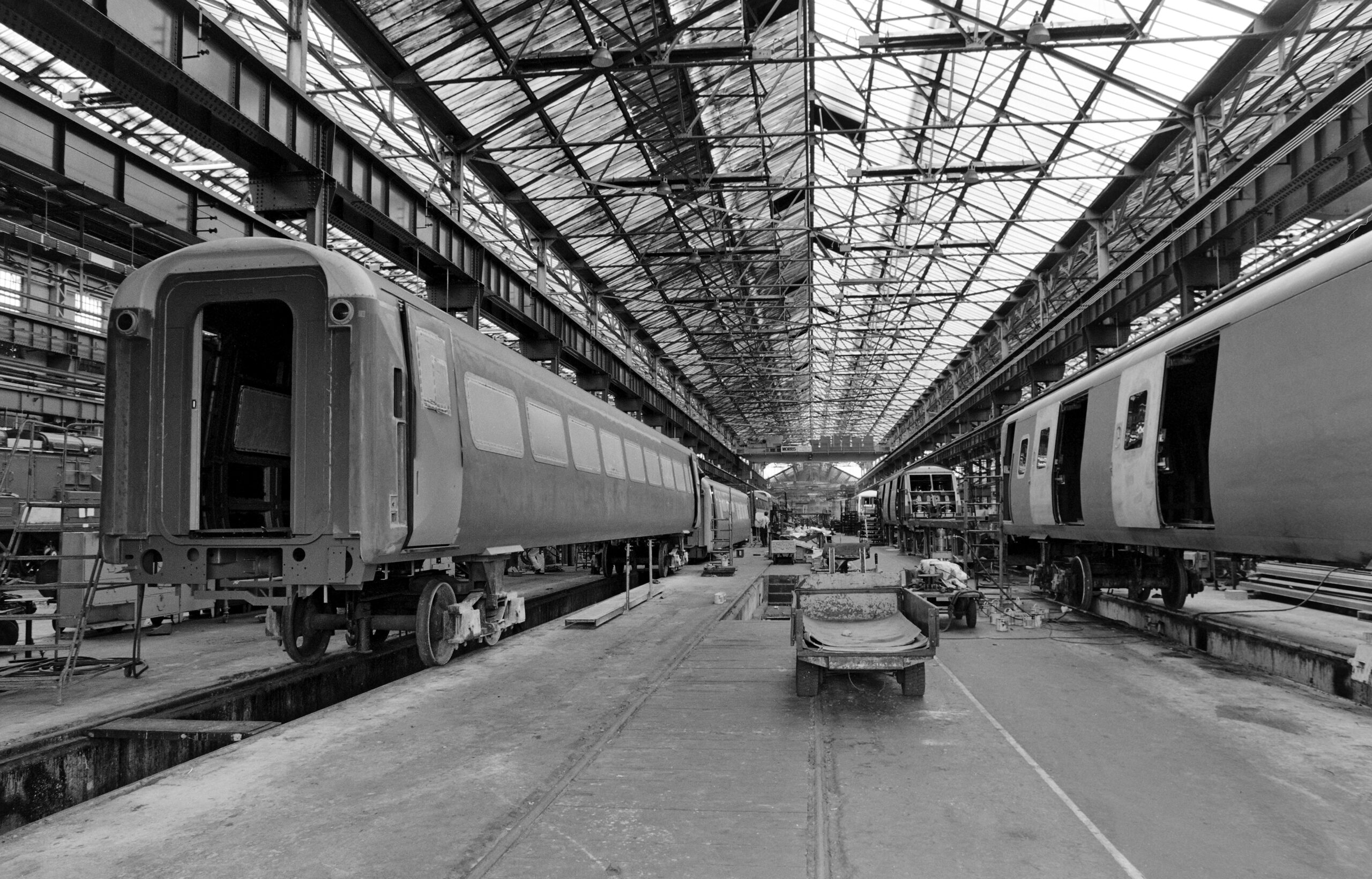
Metro-Cammell is awarded the contract to build and supply the Mark 4 vehicles. This initially includes 251 coaches and 32 DVTs, but the number of coaches is later increased to 282 to alleviate overcrowding and provide capacity for growth. Bodyshells are constructed by BREL at Crewe and Derby as well as by Società Italiana Ernesto Breda in Italy. They’re then shipped to Metro-Cammell at Washwood Heath in Birmingham for fitting out.
Picture: two lines of Mark 4 coaches and DVTs under construction at BREL's Crewe Works on Tuesday 4th September 1990. COLIN J MARSDEN
October / November 1987
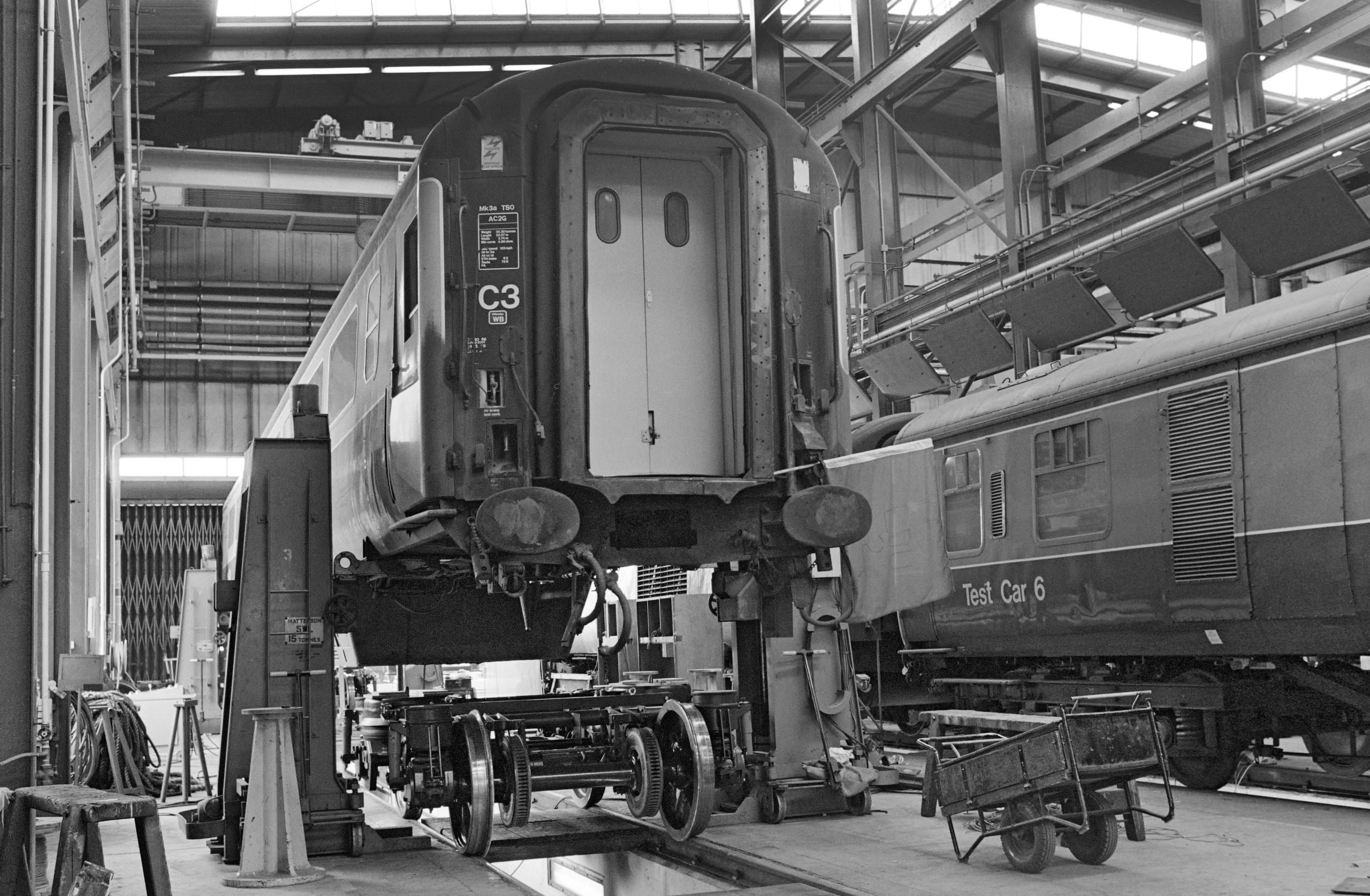
A short High Speed Train (HST) set including a modified Mark 3 coach is used to test SIG BT41 bogies for the Mark 4 rolling stock. During this work, on Sunday 1st November 1987, the train (powered by 43102 and 43159) reaches 148.5mph on the ECML between York and Darlington – a record for diesel traction that’s never been beaten.
Picture: Mark 3 coach 12140 is fitted with SIG bogies at the Railway Technical Centre in Derby on Wednesday 16th September 1987. It was used in a series of test runs on the ECML to evaluate the ride and stability of the bogies at high speeds. COLIN J MARSDEN
February 1988
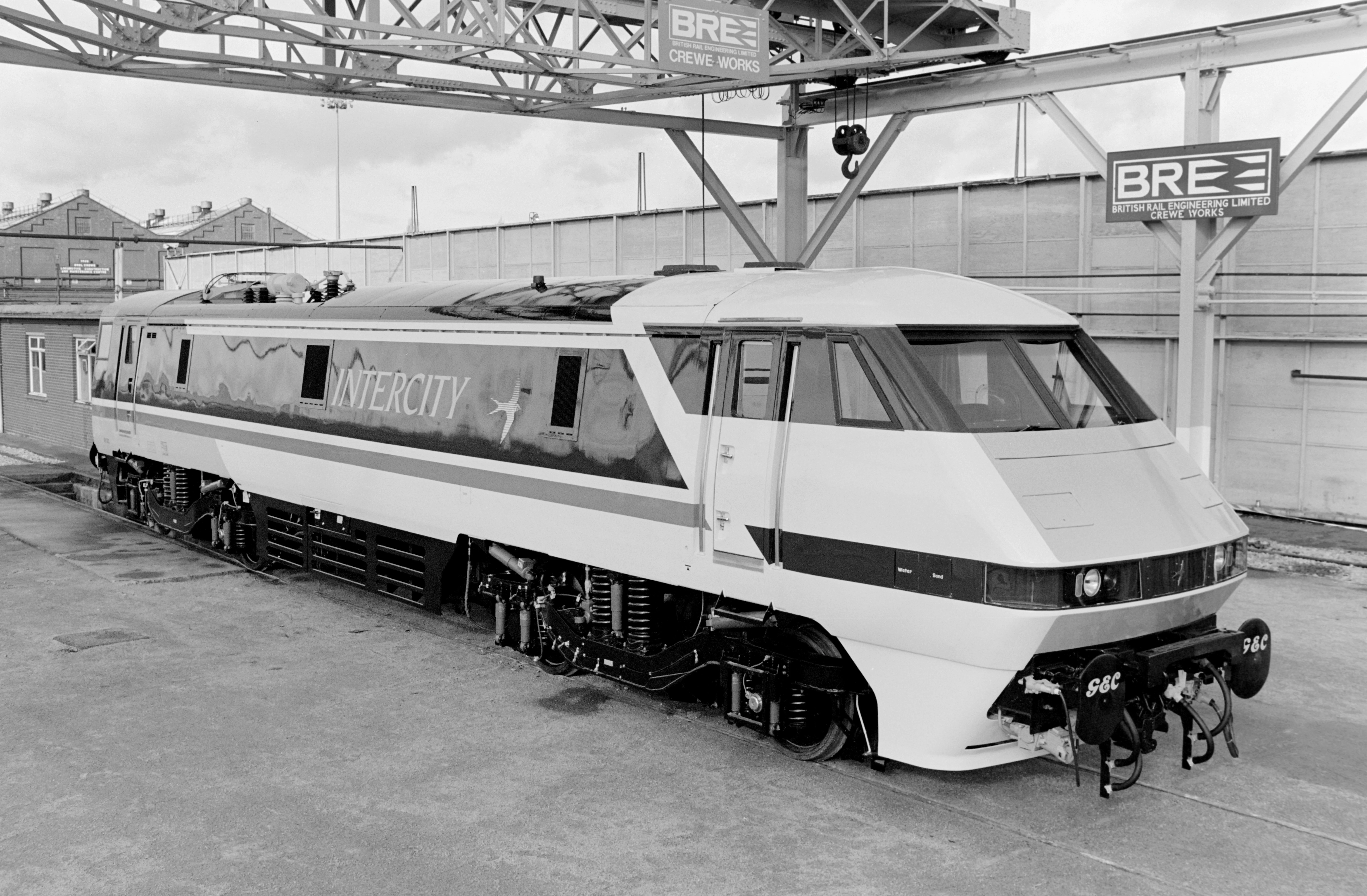
The first Class 91, 91001, is unveiled at BREL’s Crewe Works on Friday 12th February 1988. The locomotive is formally accepted by BR two days later but is still subject to extensive testing. It’s taken to Bounds Green depot, the home of the InterCity 225 fleet for more than three decades, for the first time on Monday 18th April 1988.
Picture: 91001 stands on display at BREL’s Crewe Works during the high-profile media roll out of the locomotive on Friday 12th February 1988. This was the first time that the full stunning design of the Class 91 could be seen. COLIN J MARSDEN
May / June 1988
91003 visits Hamburg in Germany for the International Traffic and Transport Exhibition, the forerunner of InnoTrans, which is now the world’s largest trade fair for rail transport technology.
March 1989
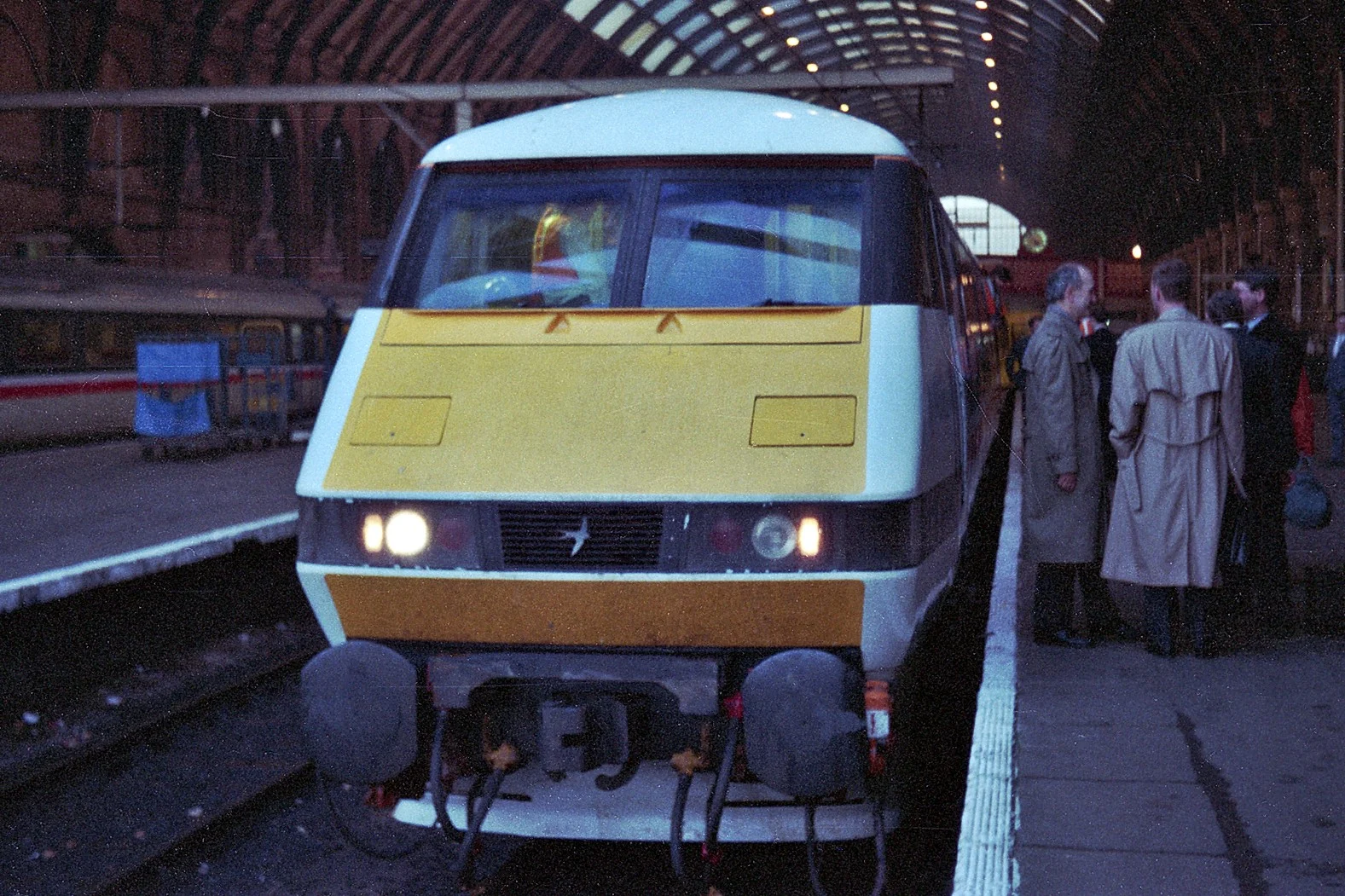
Class 91 passenger operation commences on Friday 3rd March 1989 when 91001 hauls the 1736 London King’s Cross to Peterborough. As the Mark 4 rolling stock isn't ready, the train is formed of Mark 3 vehicles plus a modified HST power car acting as 'surrogate' DVT and supplying power to the lights, air-conditioning and other onboard systems. Services to Leeds start on Saturday 11th March 1989, with 91008 working the first journey at 0650 from London King’s Cross.
Picture: 91001 prepares to leave London King’s Cross with the 1736 to Peterborough on Friday 3rd March 1989. ANDREW WHITEHEAD
July 1989
The government authorises electrification of the 27-mile route between Edinburgh and Carstairs, on the West Coast Mainline (WCML). This is an add-on to the original ECML project and paves the way for InterCity 225s to serve Glasgow.
September 1989
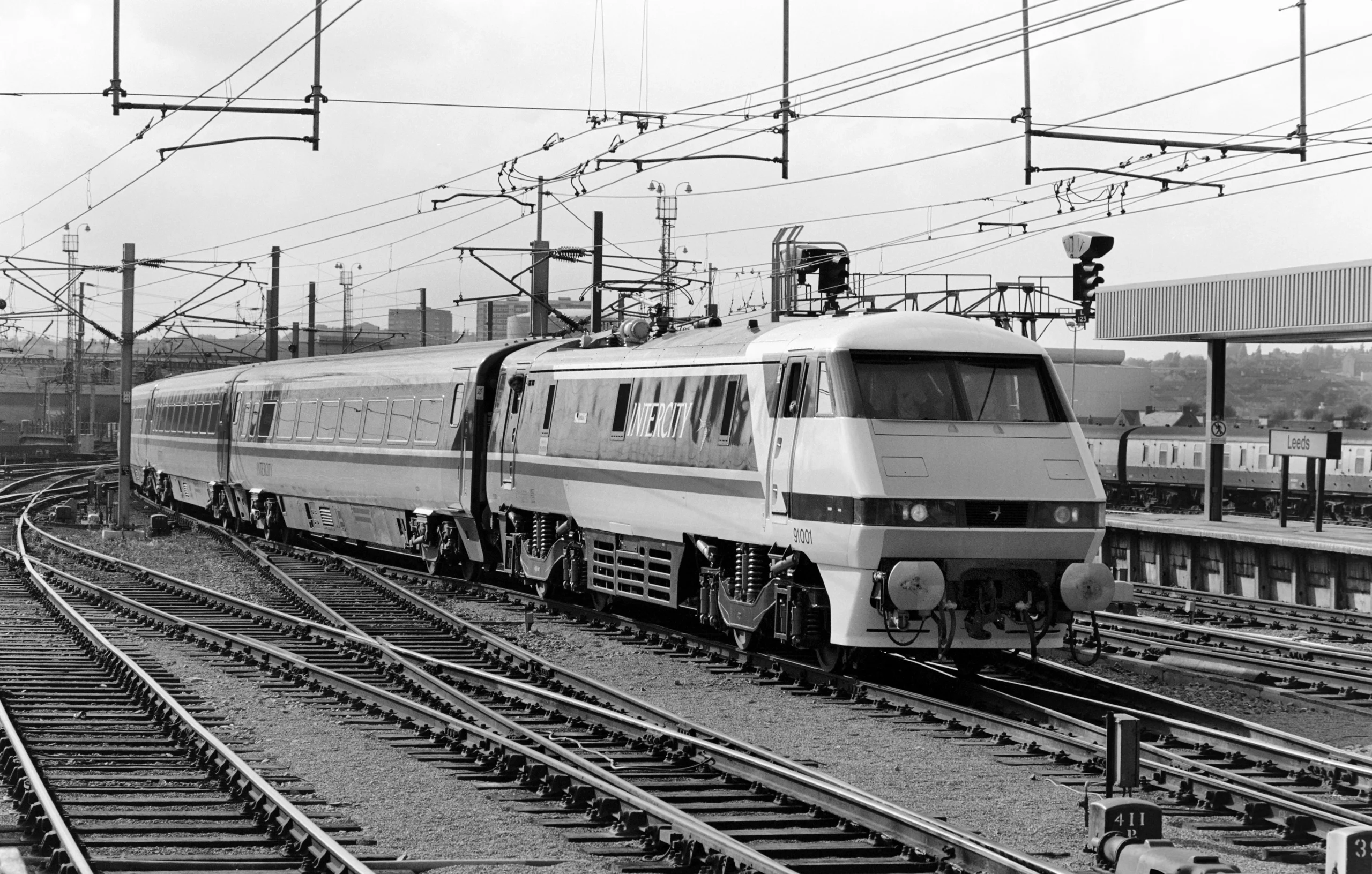
On Sunday 17th September 1989, 91010 attains a speed of 161.7mph at Little Bytham during testing with five Mark 4 coaches and a DVT – a British record for an electric locomotive that still stands. Three days later, the railway media and other invited guests get their first chance to travel in the Mark 4 coaches when BR launches the stock with a return trip between London and Leeds. Before leaving King’s Cross, 91001 is named “Swallow”, the emblem of InterCity.
Picture: 91001 “Swallow” arrives at Leeds on Wednesday 20th September 1989 with the empty stock to form the 1540 to London King’s Cross – the second part of the special trip to launch the Mark 4 rolling stock. COLIN J MARSDEN
October 1989
The first full InterCity 225 enters passenger service on Monday 2nd October 1989 on the Leeds-based ‘Yorkshire Pullman’ diagram. The inaugural journey is the 0715 Leeds to London King's Cross, powered by 91001 "Swallow".
September 1990
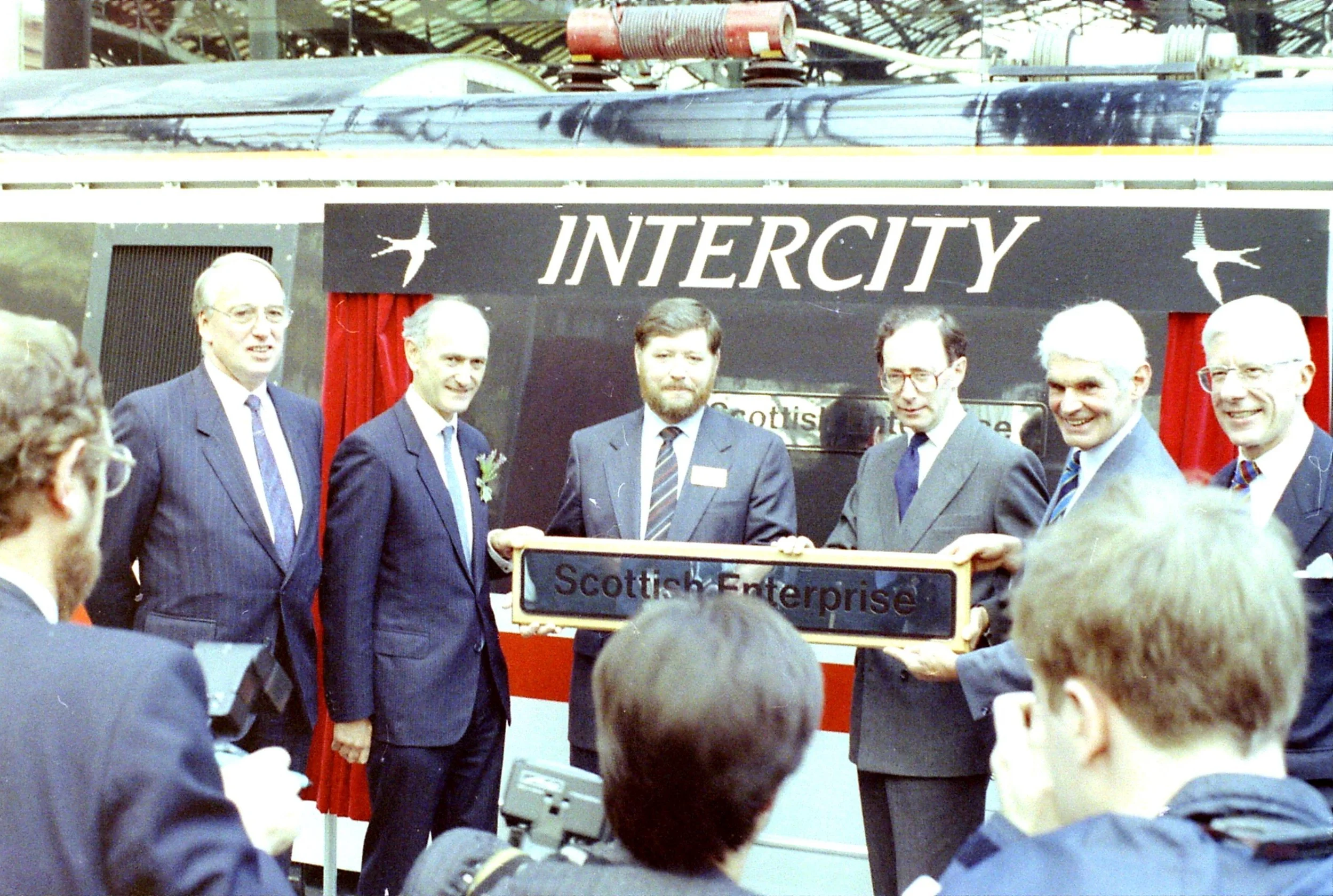
On Wednesday 12th September 1990, 91019 becomes the first Class 91 locomotive to visit Edinburgh and is named “Scottish Enterprise” during an event to celebrate electrification and publicise the planned InterCity 225 services to/from London. As the overhead line equipment isn’t fully energised, a Class 47 diesel locomotive drags 91019 and its Mark 4 set between Drem and Edinburgh.
Picture: the naming ceremony for 91019 on Wednesday 12th September 1990. From left to right are Chief Executive of the BR Board John Welsby, InterCity Director Dr John Prideaux, General Manager for BR Eastern Region John Nelson, Secretary of State for Scotland Malcolm Rifkind MP, Scotrail Chairman John Cameron and Scotrail Director Cyril Bleasdale. KENNETH BARCLAY
June 1991
On Monday 10th June 1991, 91009 works the first InterCity 225 passenger service between London King’s Cross and Newcastle. Two days later, the same locomotive has the distinction of operating the first electric passenger trains on the ECML north of Newcastle – the 1100 London King’s Cross to Edinburgh and 1730 return. Queen Elizabeth II officially inaugurates the Anglo-Scottish InterCity 225 service on Friday 28th June 1991, travelling on a special train from London to Edinburgh hauled by 91029. Before departure from King’s Cross, Her Majesty names the locomotive “Queen Elizabeth II”.
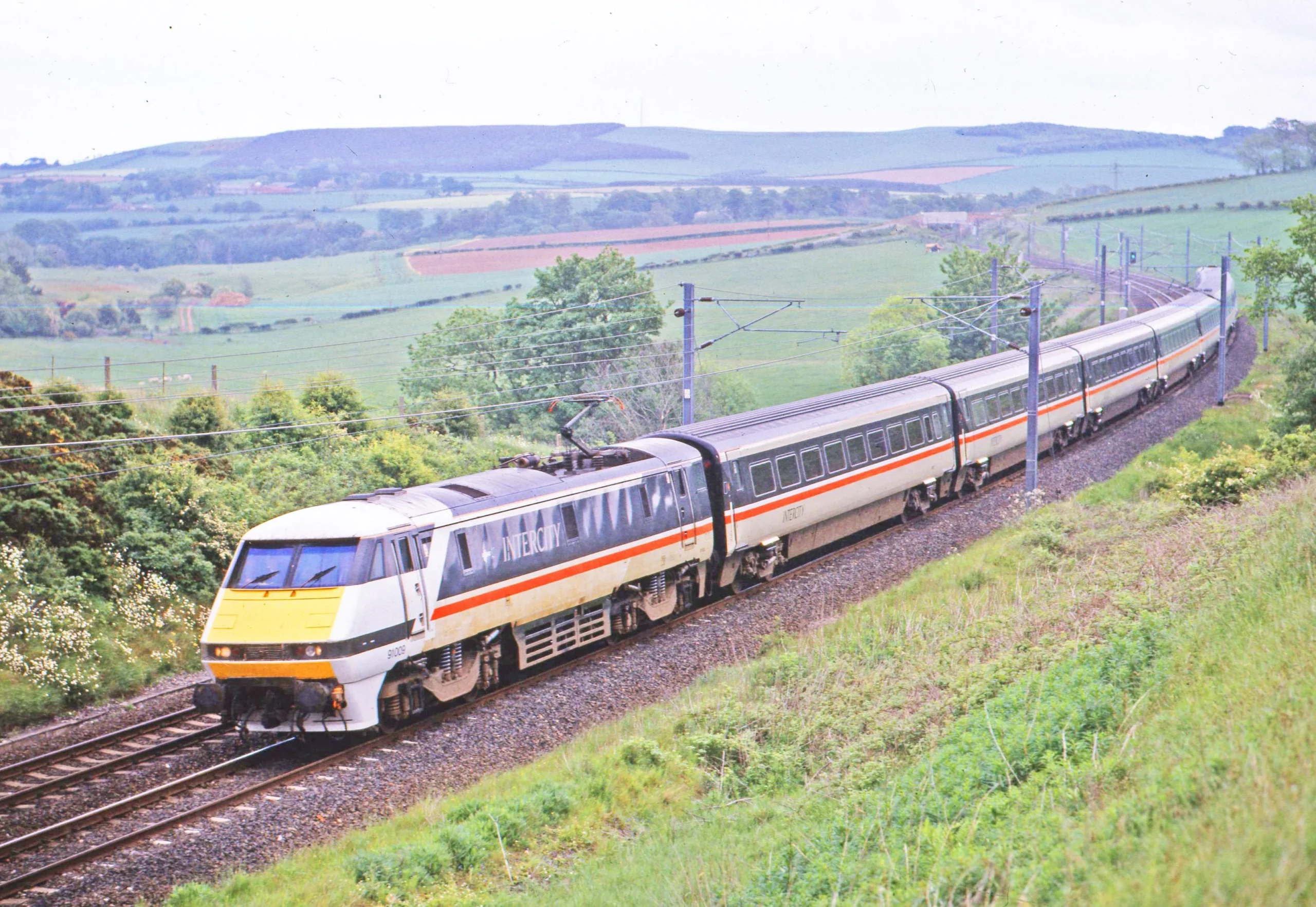
91009 approaches Horn Burn, near Berwick-upon-Tweed, with the 1100 London King’s Cross to Edinburgh on Wednesday 12th June 1991. PETER J ROBINSON
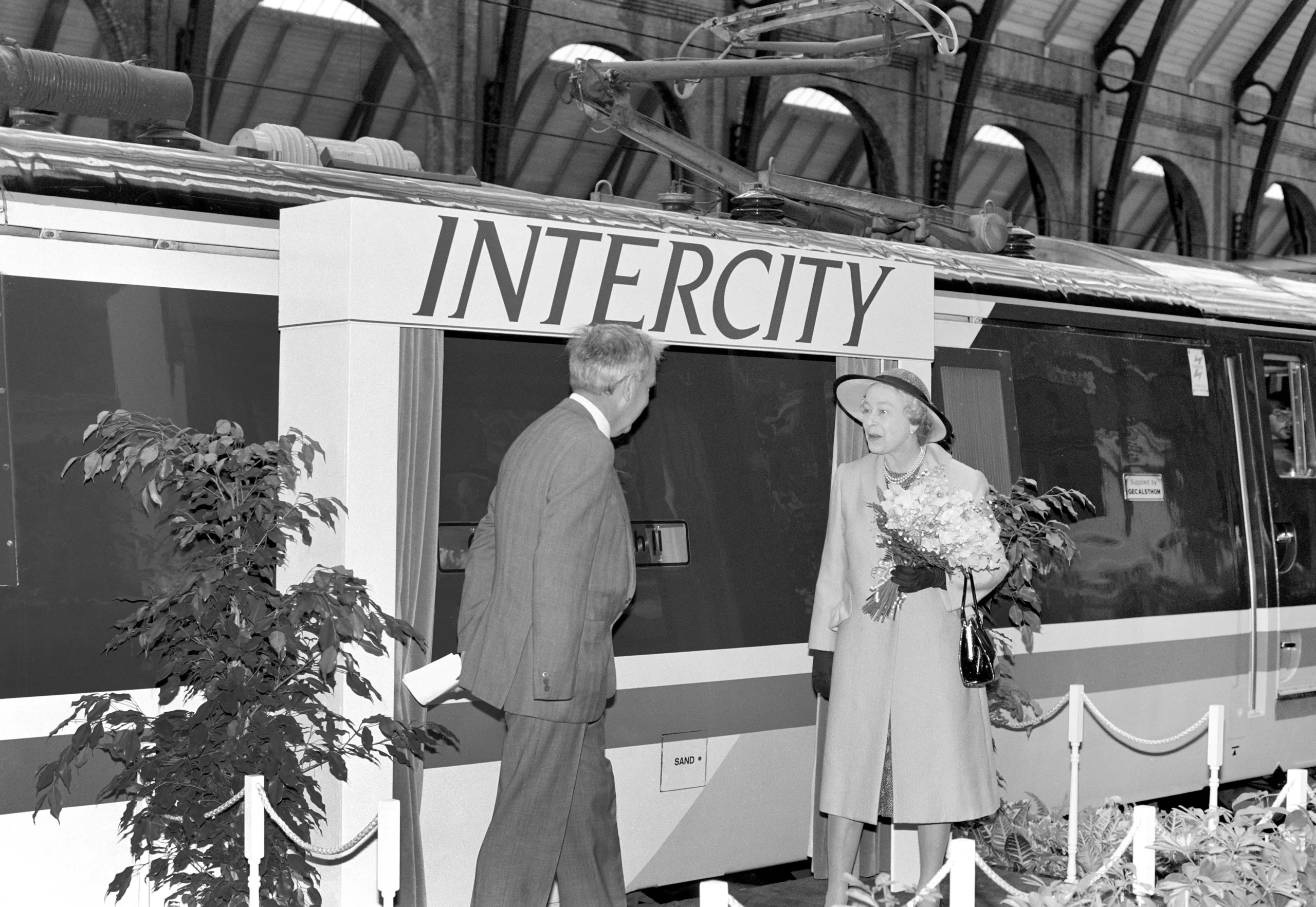
Her Majesty stands with BR Chairman Sir Bob Reid shortly after naming 91029 "Queen Elizabeth II" at London King's Cross on Friday 28th June 1991. COLIN J MARSDEN
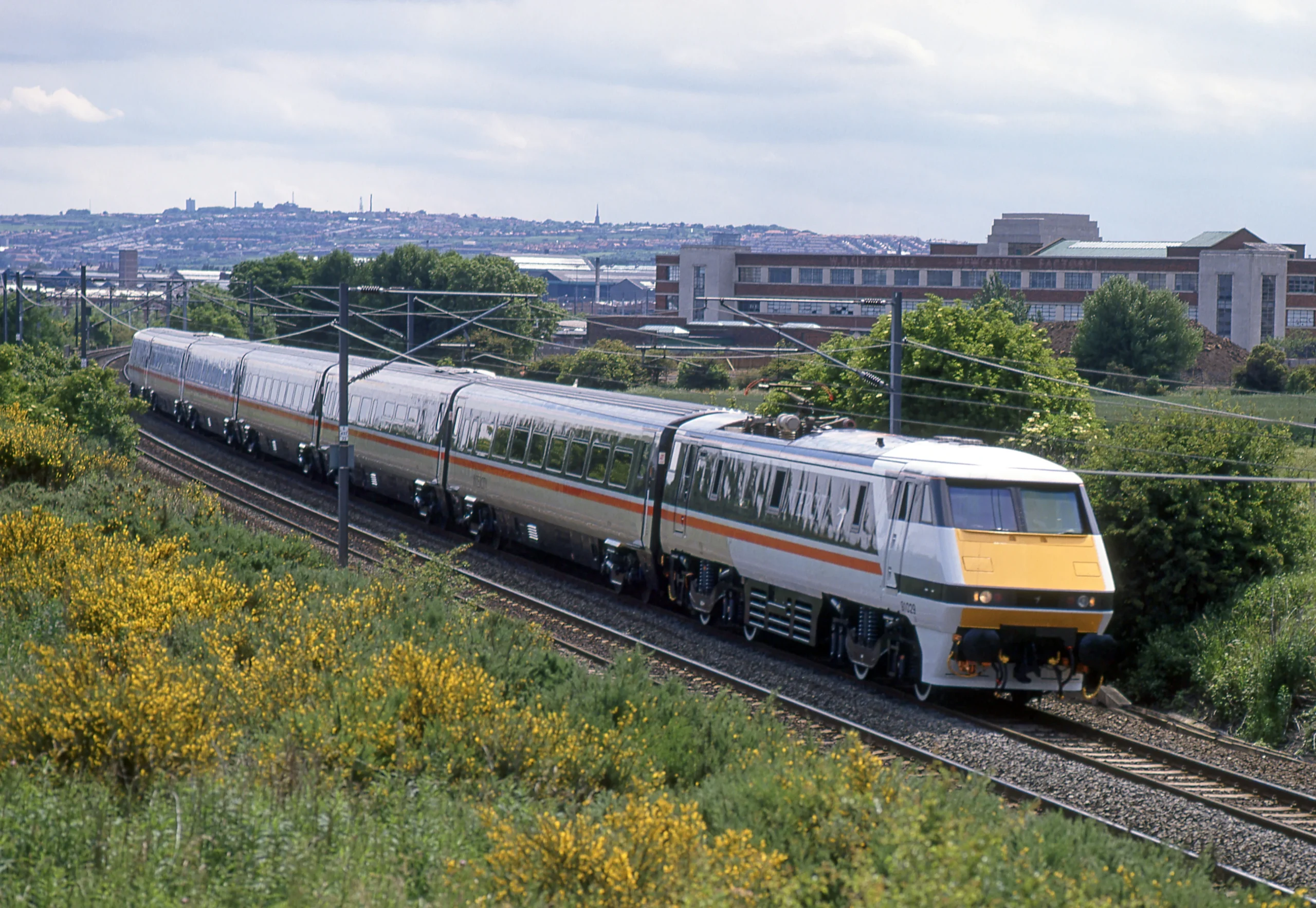
91029 "Queen Elizabeth II" passes Little Benton, north of Newcastle, with the special royal train, the 1115 London King’s Cross to Edinburgh, on Friday 28th June 1991. DOUGLAS JOHNSON
July 1991
Monday 8th July 1991 sees the introduction of the ECML InterCity 225 timetable, which increases service levels, reduces journey times and provides regular links with Glasgow. It had been planned to start on Monday 13th May 1991, but the date was put back due to delays with signal improvement works at Newcastle.
September 1991
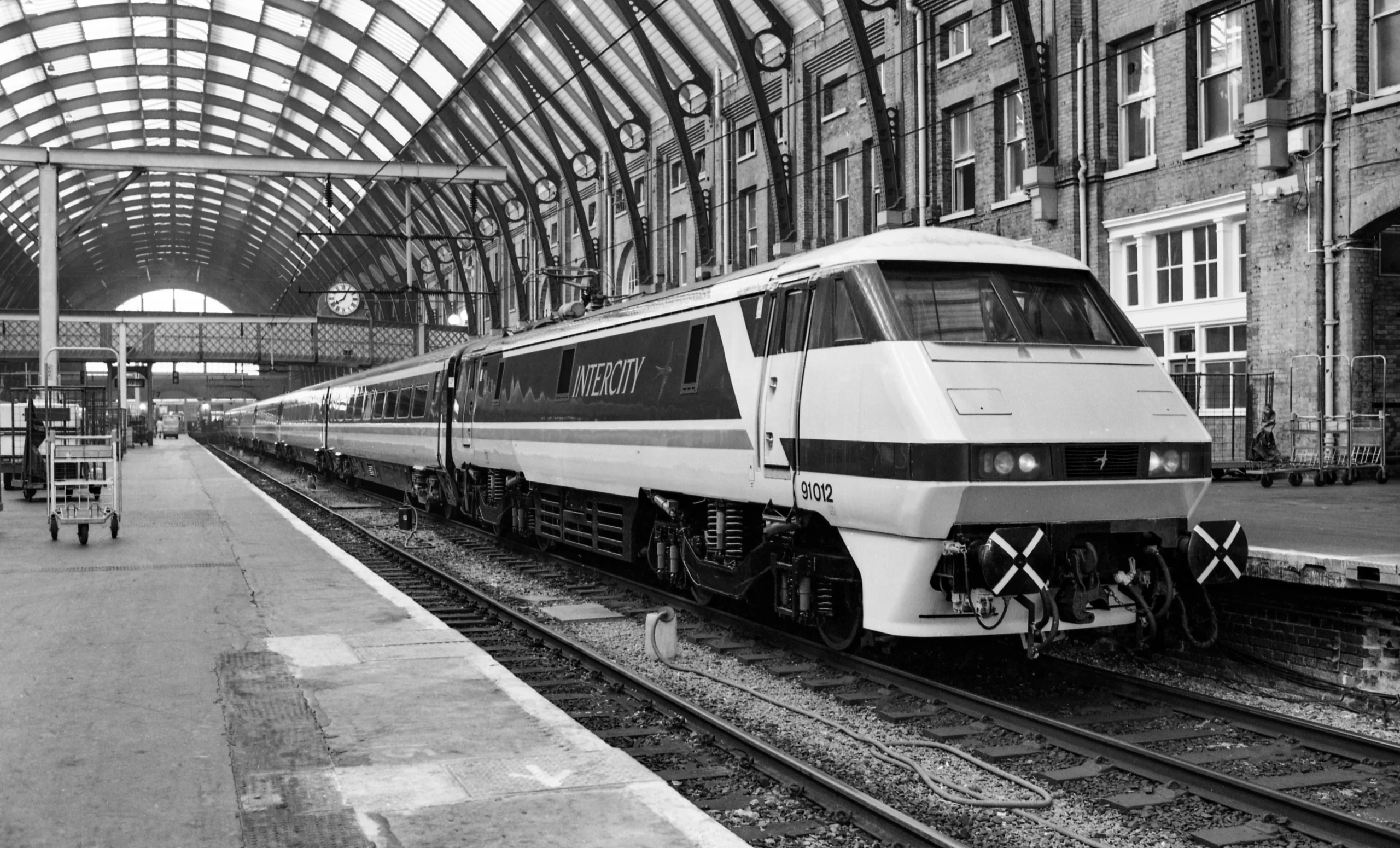
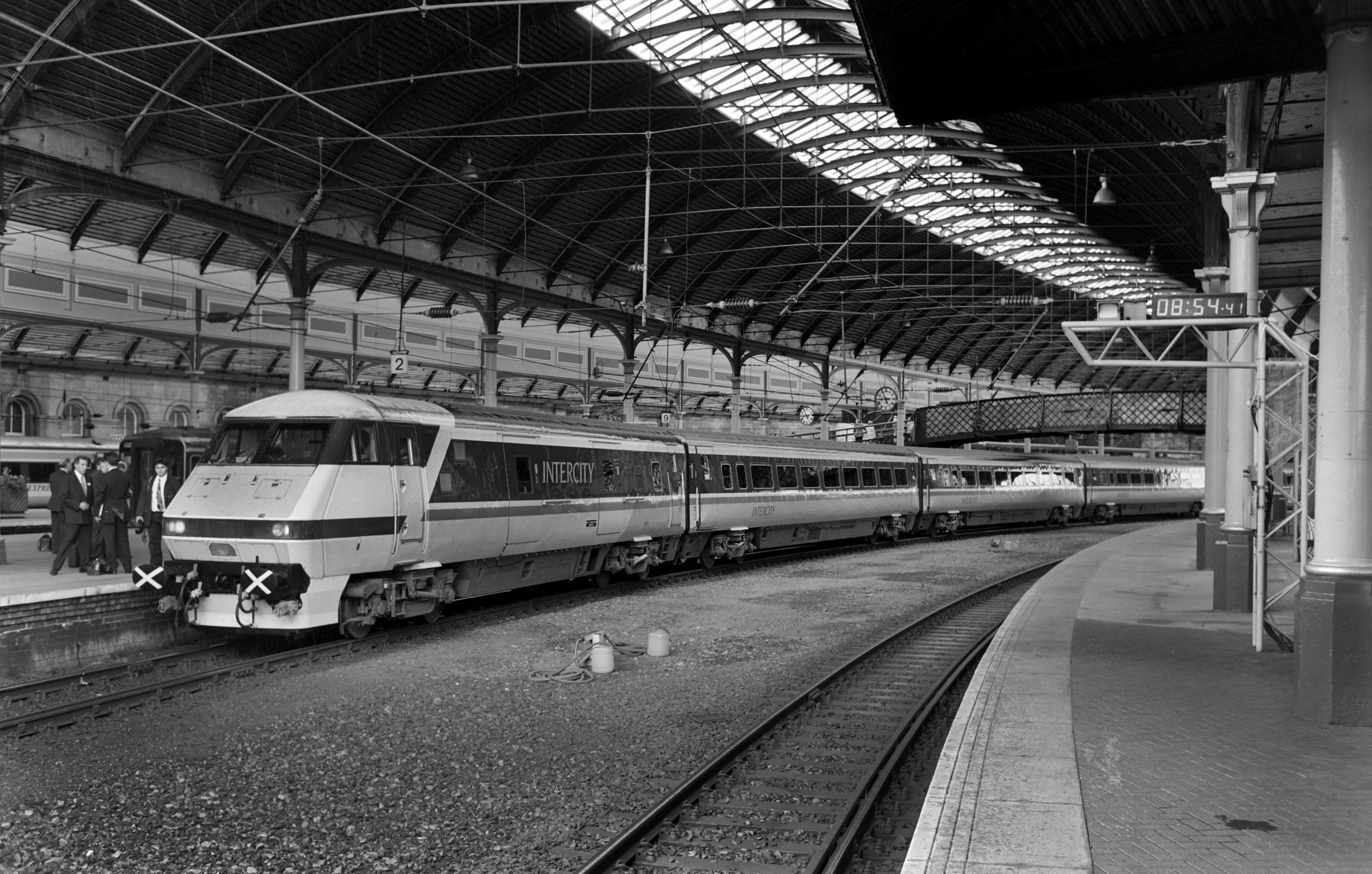
BR is keen to demonstrate the comfort, speed and technical capabilities of the InterCity 225 and arranges a non-stop run from London King’s Cross to Edinburgh on Thursday 26th September 1991. The train, formed of 91012 plus five Mark 4 coaches and a DVT, runs at speeds of up to 140mph and completes the journey in three hours and 29 minutes – another record that still stands today.
Picture: 91012 at London King’s Cross on Thursday 26th September 1991 ahead of its special non-stop run to Edinburgh. The ‘X’ marks on the buffers indicate to staff that the train is authorised to exceed 125mph. COLIN J MARSDEN
April 1992
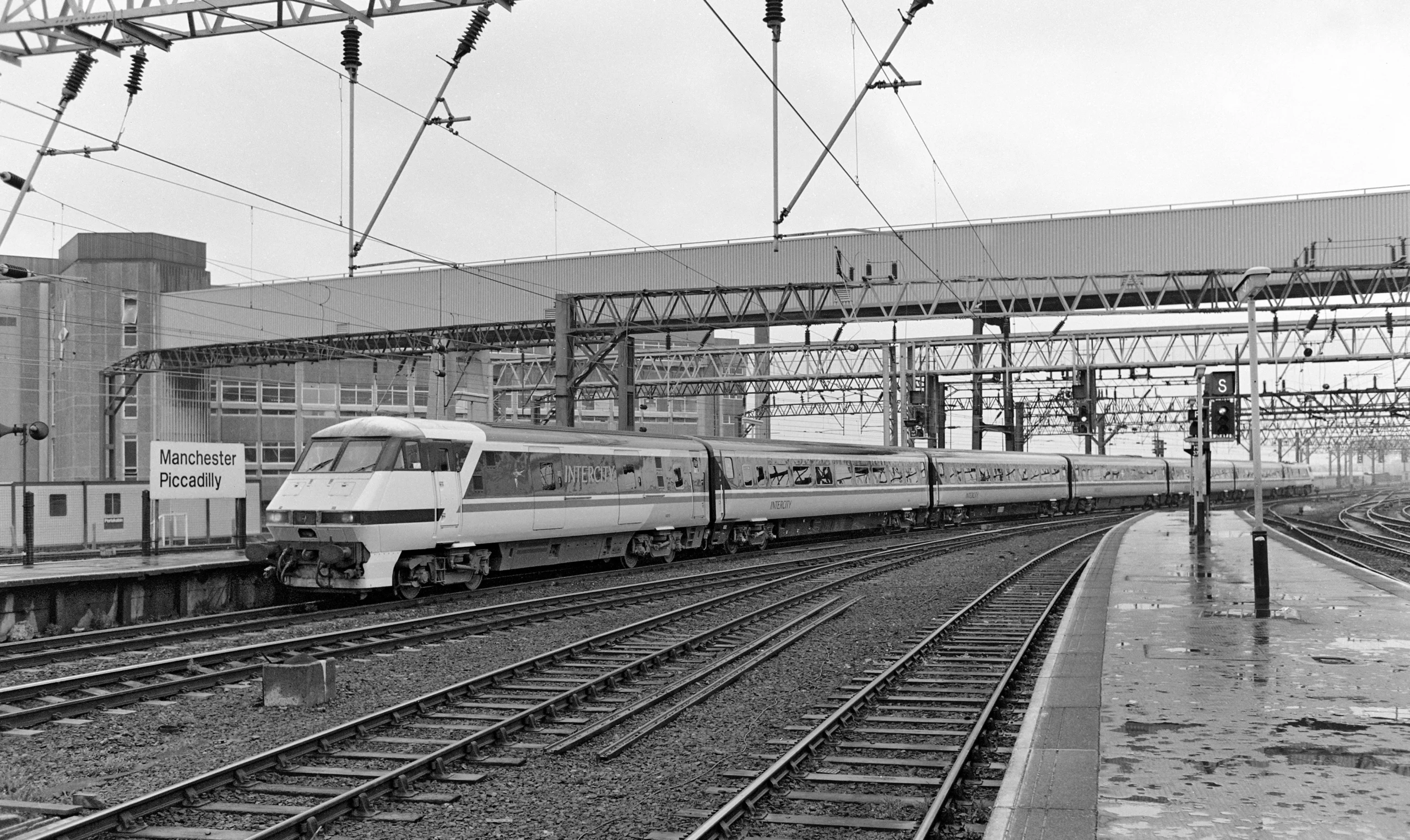
BR arranges a series of InterCity 225 demonstration runs on the WCML to show what could be achieved from route modernisation. On Thursday 23rd April 1992, 91019 “Scottish Enterprise” works between Manchester Piccadilly and London Euston with a set formed of five coaches and a DVT. On Thursday 30th April 1992, 91029 “Queen Elizabeth II” is used with another short set and runs from Manchester Piccadilly to London Euston in two hours and eight minutes – a record that would stand until the first phase of the WCML upgrade is completed in 2004. The train returns north via Birmingham International, Wolverhampton and the site of a proposed Birmingham Heartlands station.
Picture: 82213 leads the empty stock into Manchester Piccadilly on the morning of Thursday 30th April 1992. COLIN J MARSDEN
June / July 1993
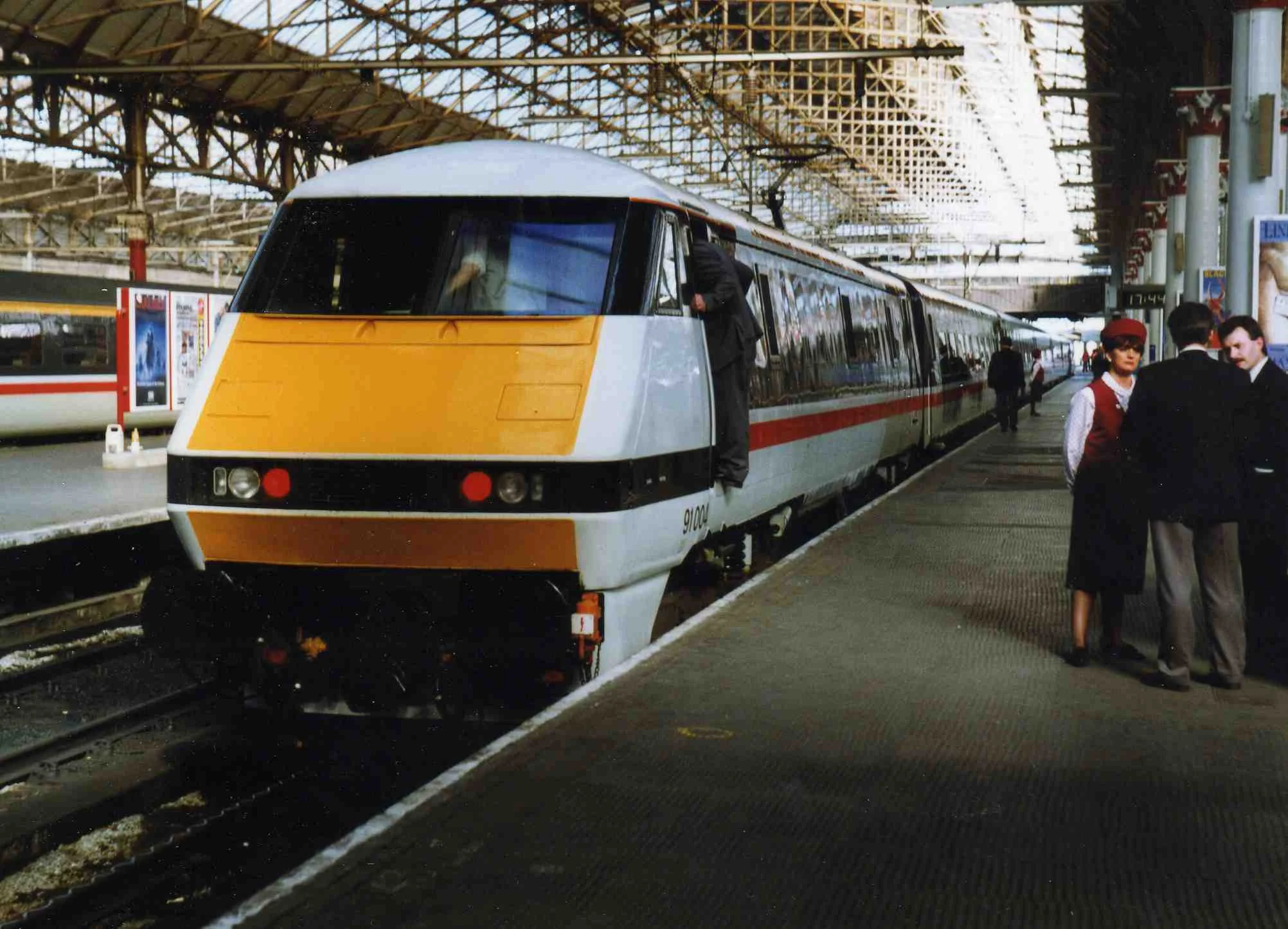
To further promote investment in new rolling stock for the WCML, a full InterCity 225 makes several runs over the route between Sunday 27th June and Thursday 1st July 1993 to show off its design and demonstrate its performance. On the first day, the train, powered by 91004 “The Red Arrows”, travels from Manchester Piccadilly to London Euston then heads north to Polmadie depot in Glasgow. 91004 is replaced by 91001 “Swallow” and, over the next four days, the train completes journeys between London Euston and Carlisle, Glasgow Central, Liverpool Lime Street, Manchester Piccadilly and Wolverhampton.
Picture: 91004 “The Red Arrows” stands at Manchester Piccadilly prior to working the 1800 demonstration run to London Euston on Sunday 27th June 1993. STEVE KEMP
June 1995
On Friday 2nd June 1995, InterCity 225 makes history once again when 91031 “Sir Henry Royce” reaches 154.1mph on a special trip from Newcastle to Peterborough with five Mark 4 coaches and a DVT. This sets a new UK speed record for a passenger-carrying train, which has only been surpassed on the purpose-built high-speed route linking London with the Channel Tunnel.
Picture: 82231 prepares to leave Newcastle with the return leg of the high-speed demonstration run from Peterborough on Friday 2nd June 1995. 91031 “Sir Henry Royce” is on the rear. COLIN J MARSDEN
April 1996
As part of BR’s privatisation, Eversholt Rail Group takes ownership of the Class 91 locomotives and Mark 4 rolling stock. Sea Containers wins the InterCity East Coast (ICEC) franchise and its subsidiary, Great North Eastern Railway (GNER), begins operating services on Sunday 28th April 1996. InterCity 225s are the mainstay of its fleet, with a small number of HSTs running services that cover non-electrified routes.
October 1996
GNER adopts a glossy livery consisting of a dark blue base colour, red stripe and gold lettering. The company also decides that, in the grand style of railway heraldry, coaches will carry a crest featuring lions, roses and thistles within a belt and buckle, mounted beneath the words 'Route of the Flying Scotsman'. The first new-look train, formed of 91019 “Scottish Enterprise”, nine Mark 4 coaches and DVT 82204, enters service without ceremony on Monday 21st October 1996. The livery and crest are formally unveiled during an event at London King’s Cross on Tuesday 28th January 1997.
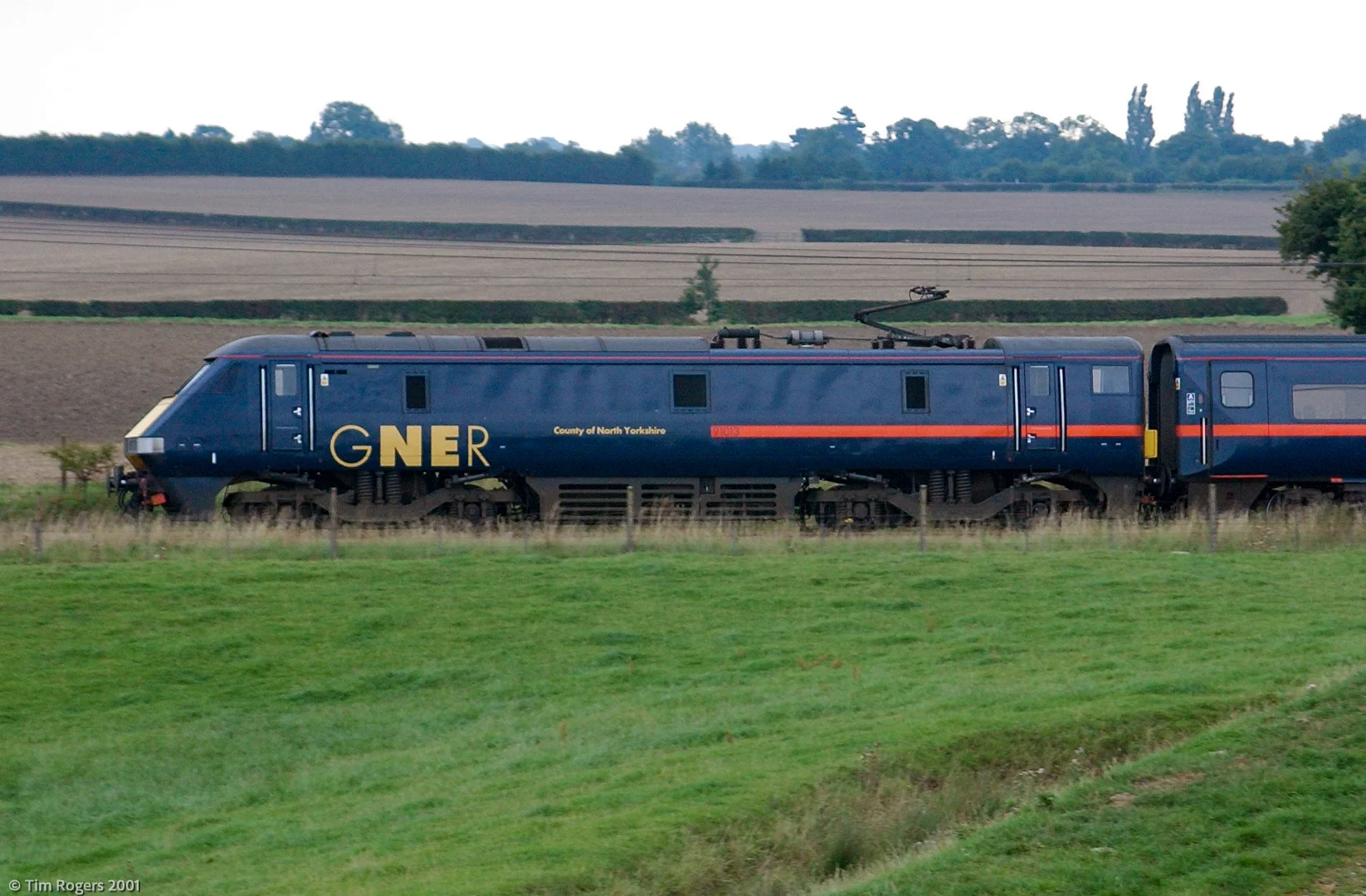
91013 "County of North Yorkshire" shows off the GNER livery near Colton Junction on Friday 31st August 2001. TIM ROGERS
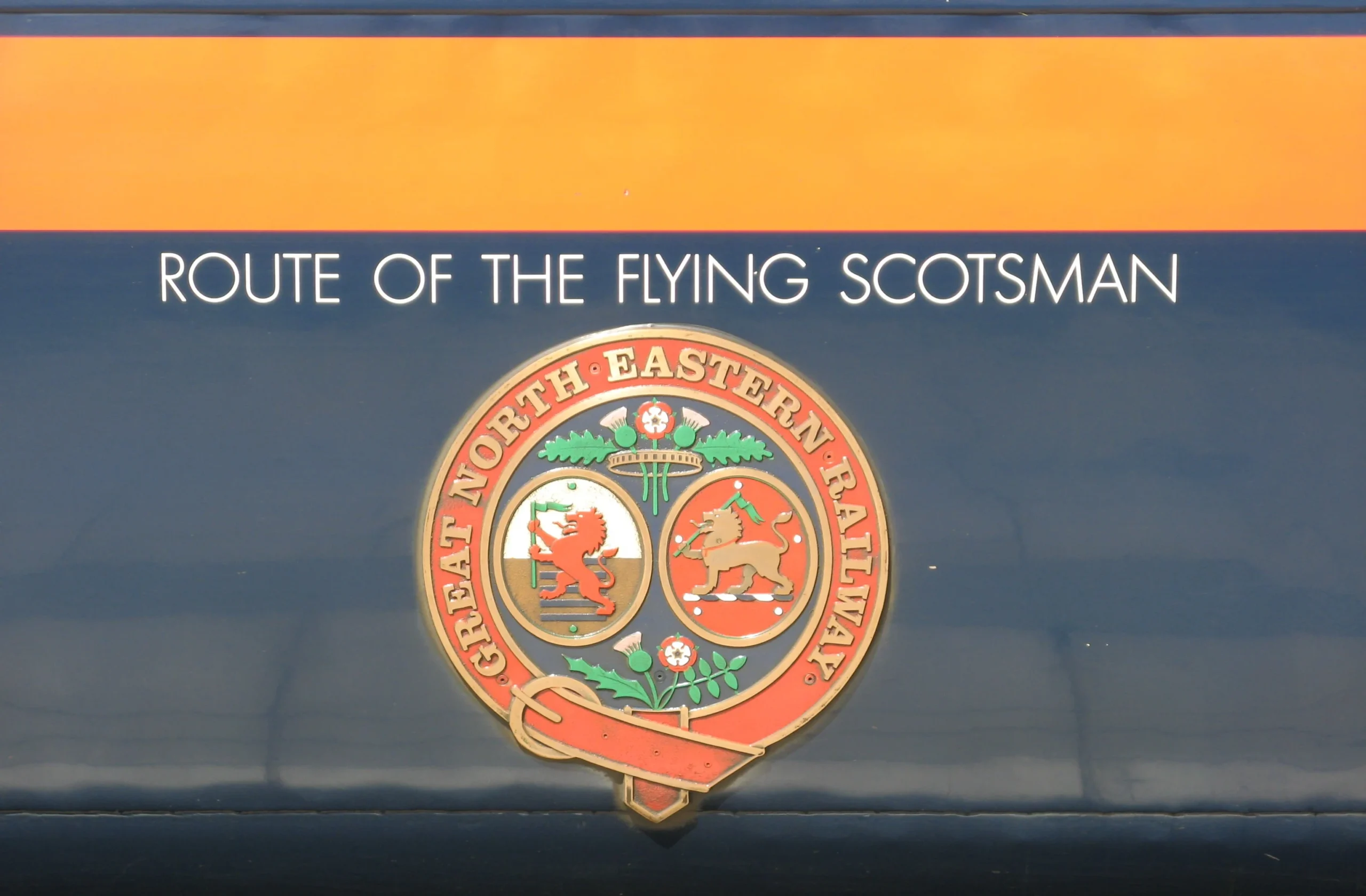
GNER crest mounted on the side of a Mark 4 coach underneath the words ‘Route of the Flying Scotsman’. CHRIS CURTIS
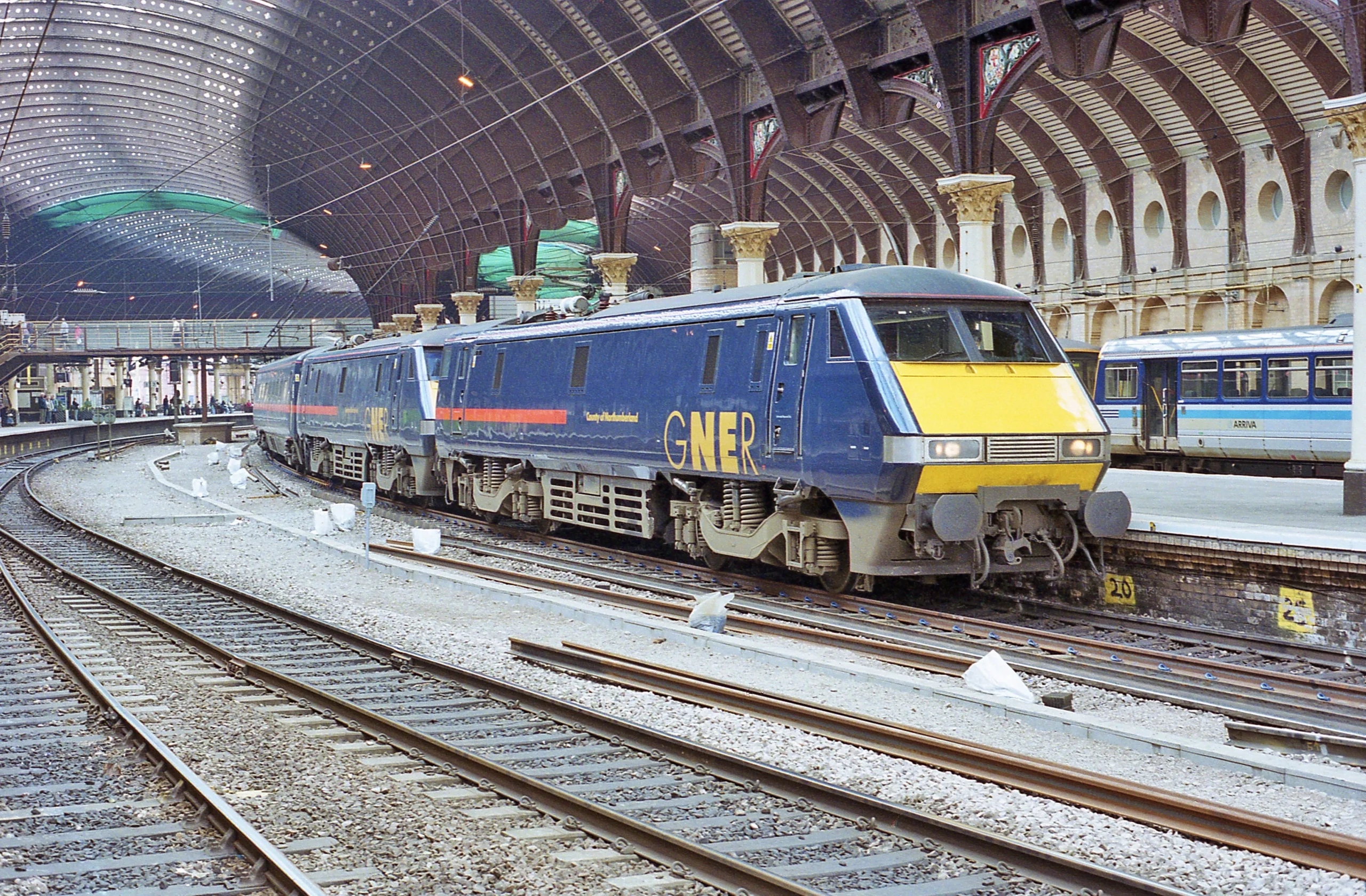
91031 "County of Northumberland" pauses at York as it works a northbound service on Saturday 30th March 2002. CARL LOOKER
October 2000
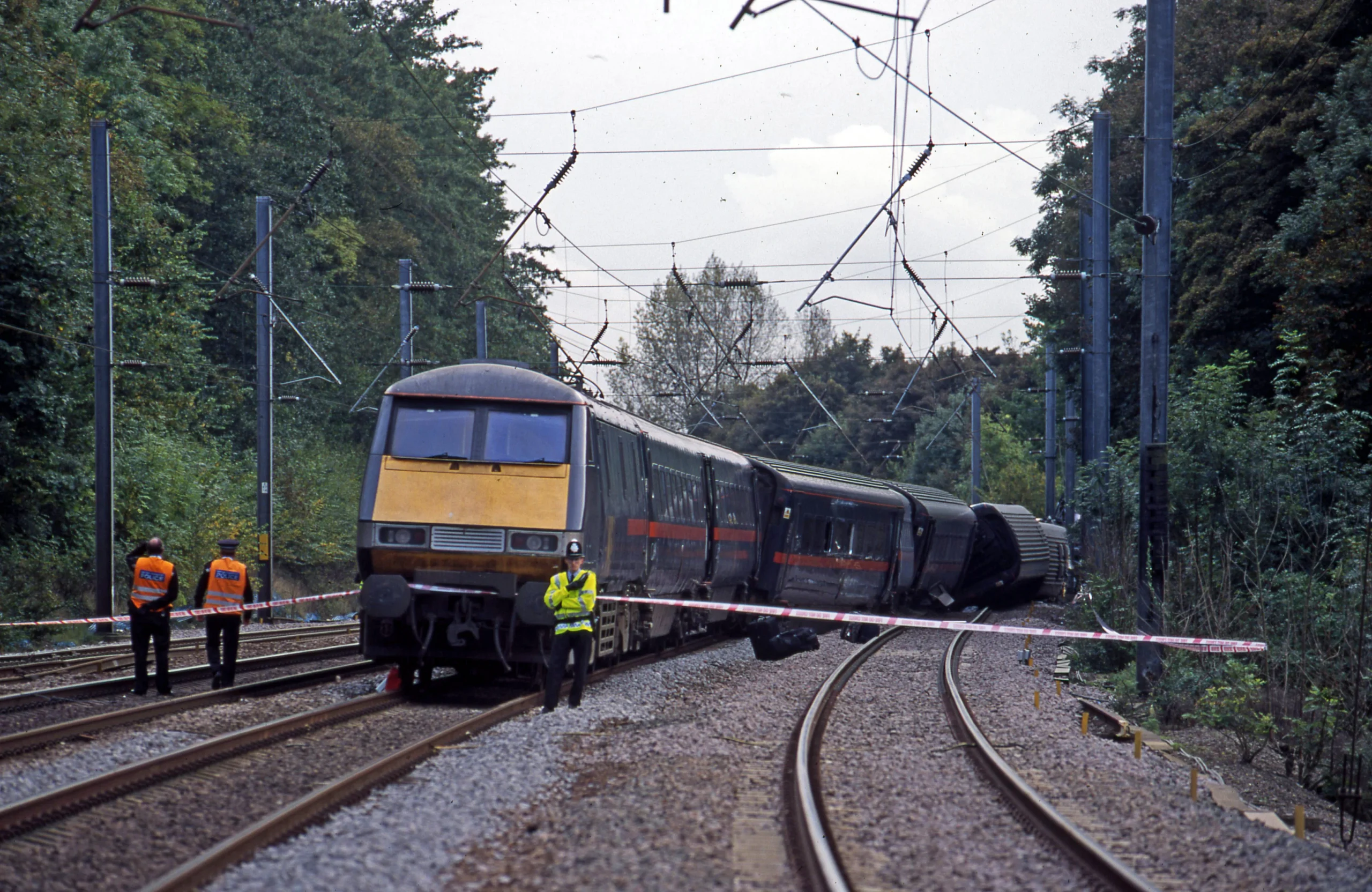
On Tuesday 17th October 2000, tragedy strikes when the 1210 London King’s Cross to Leeds, hauled by 91023, derails near Hatfield, killing four and injuring more than 70 people. After a broken rail is found to be the cause, widespread speed restrictions are imposed, many as low as 20mph, while checks are carried out on the condition of infrastructure in similar places across the network.
Picture: 91023 stands on the curve south of Hatfield where its train came to a halt after it was derailed as it headed north on Tuesday 17th October 2000. CHRIS MILNER
January 2001
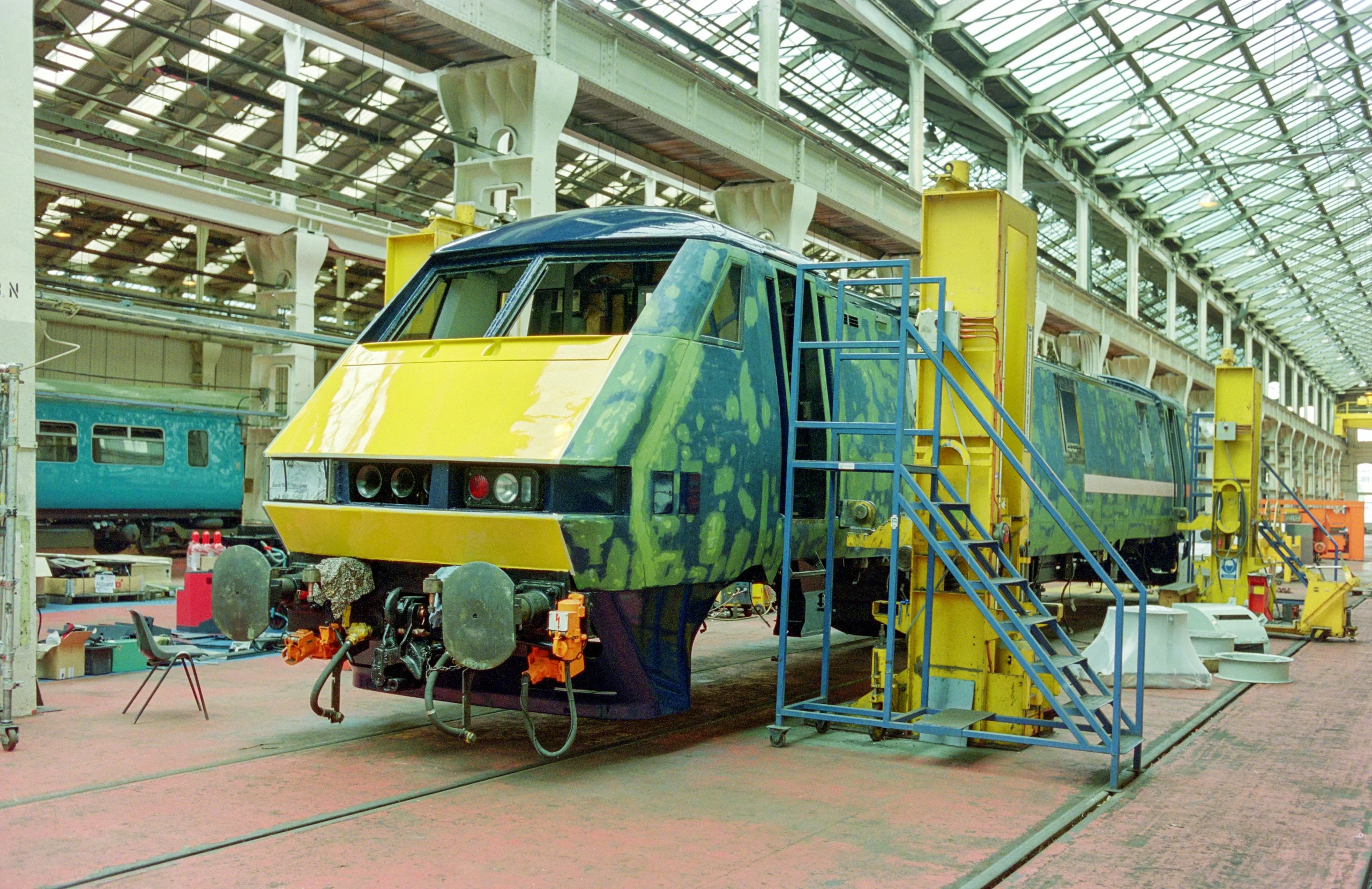
The Class 91s are becoming unreliable so GNER and HSBC, which acquired Eversholt Rail Group in 1997, agree on a major refurbishment programme called Project Delta. This brings together Alstom and Adtranz, traditionally two rivals in the railway industry, as well as AEA and Interfleet Technology. Overhauls are carried out at Doncaster Works and the first locomotive to be completed, 91127 “Edinburgh Castle”, is unveiled at London King’s Cross on Friday 16th January 2001.
Picture: part way through its major overhaul, 91030 stands on synchronised lifting jacks in the 'Crimpsall' shop at Doncaster Works on Tuesday 13th March 2001. COLIN J MARSDEN
February 2001
Just as the railway is recovering from the Hatfield crash, another disaster occurs at Great Heck. On Wednesday 28th February 2001, the driver of a Land Rover heading west along the M62 motorway falls asleep, allowing the vehicle and its trailer to leave the carriageway and career down an embankment onto the ECML. This leads to the derailment of the 0445 Newcastle to London King’s Cross, ironically being powered by 91023 after it escaped serious damage at Hatfield. The InterCity 225 remains upright but is deflected into the path of an oncoming coal train. In the resulting collision, ten people are killed and 82 are seriously injured.
April 2003
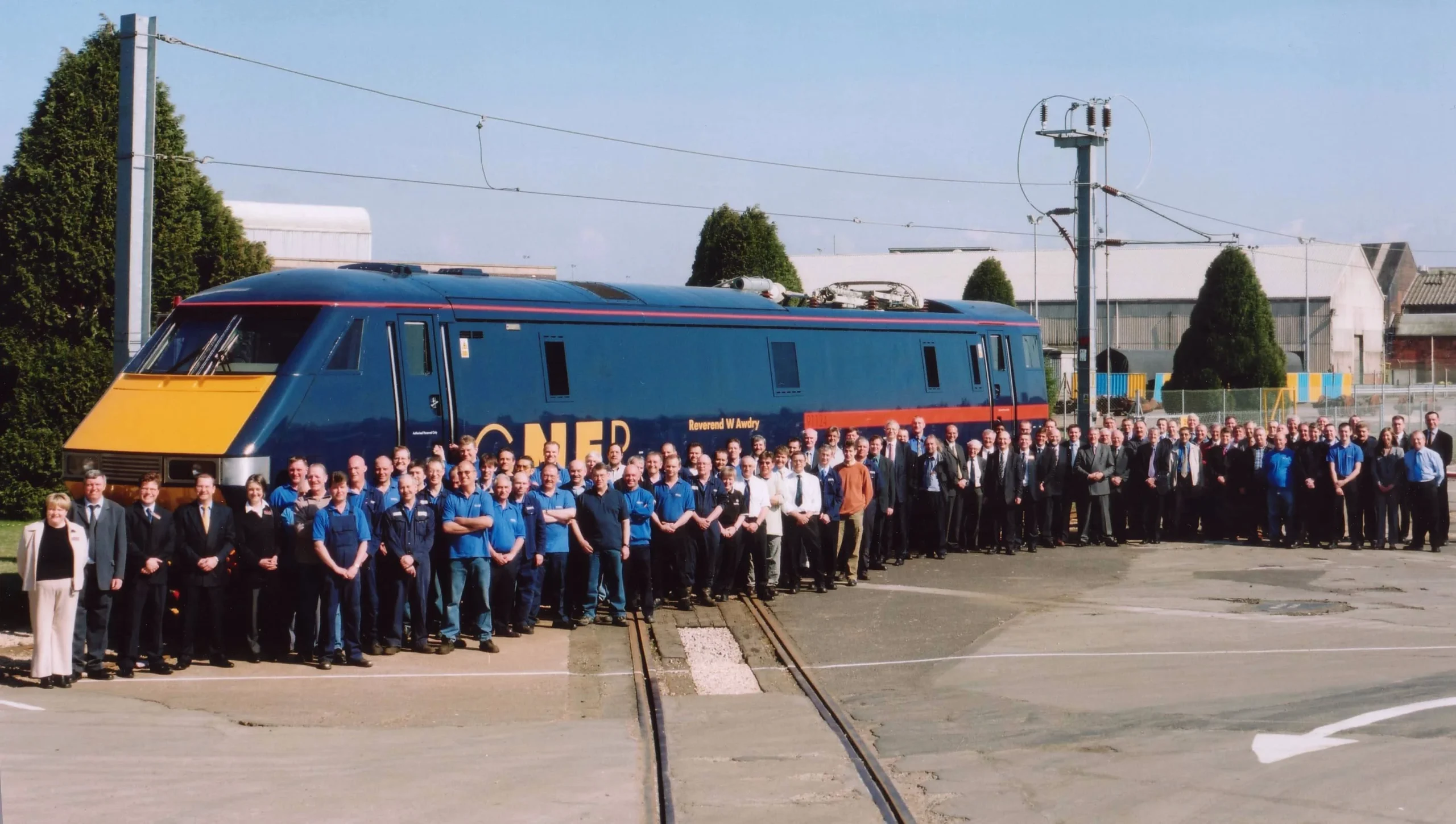
On Tuesday 8th April 2003, the last Class 91 in the Project Delta programme, 91124 “Reverend W Awdry”, is released from Doncaster Works. As part of the scheme, most locomotives have 100 added to their number – the only exception is 91023, which becomes 91132 due to its involvement in the incidents at Hatfield and Great Heck. At around the same time, Bombardier Transportation at Horbury, near Wakefield, begins work on a major refurbishment of the Mark 4 coaches to transform the environment for passengers and staff.
Picture: 91124 “Reverend W Awdry” poses at Doncaster Works with many of the team involved with the Project Delta programme. GREAT NORTH EASTERN RAILWAY
October 2003
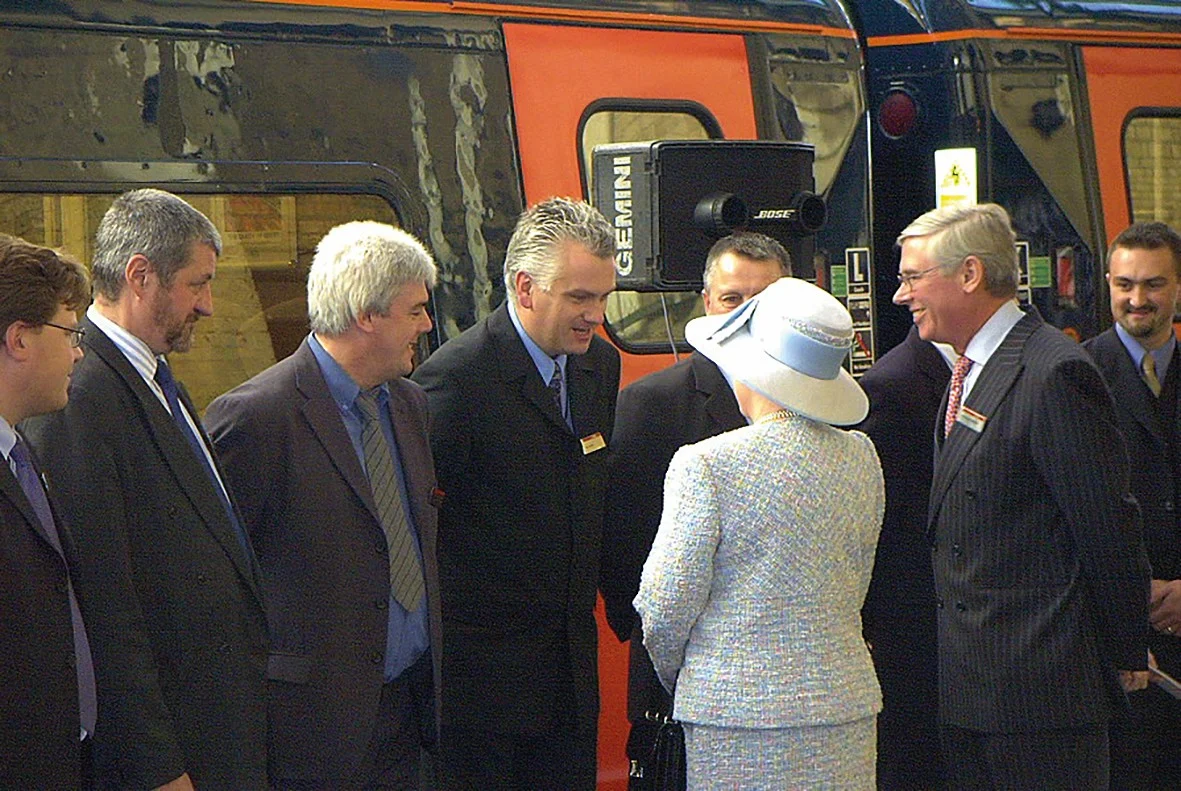
GNER brands the refurbished Mark 4 sets as ‘Mallard’ after the Gresley A4 Pacific that set the world speed record for steam traction in July 1938. Her Majesty Queen Elizabeth II launches the first ‘Mallard’ set (BN03 with DVT 82219) at London King’s Cross on Thursday 9th October 2003. Appropriately, 91129 “Queen Elizabeth II” is the locomotive used for the event.
Picture: Christopher Garnett, Chief Executive of GNER, presents Her Majesty to some of the team involved with the ‘Mallard’ project at London King’s Cross on Thursday 9th October 2003. GREAT NORTH EASTERN RAILWAY
November 2005
On Wednesday 9th November 2005, Transport Secretary Alistair Darling greets the final ‘Mallard’ set (BN02 with DVT 82202) in a ribbon-cutting ceremony at London King’s Cross to mark the completion of the InterCity 225 fleet upgrade.
December 2006
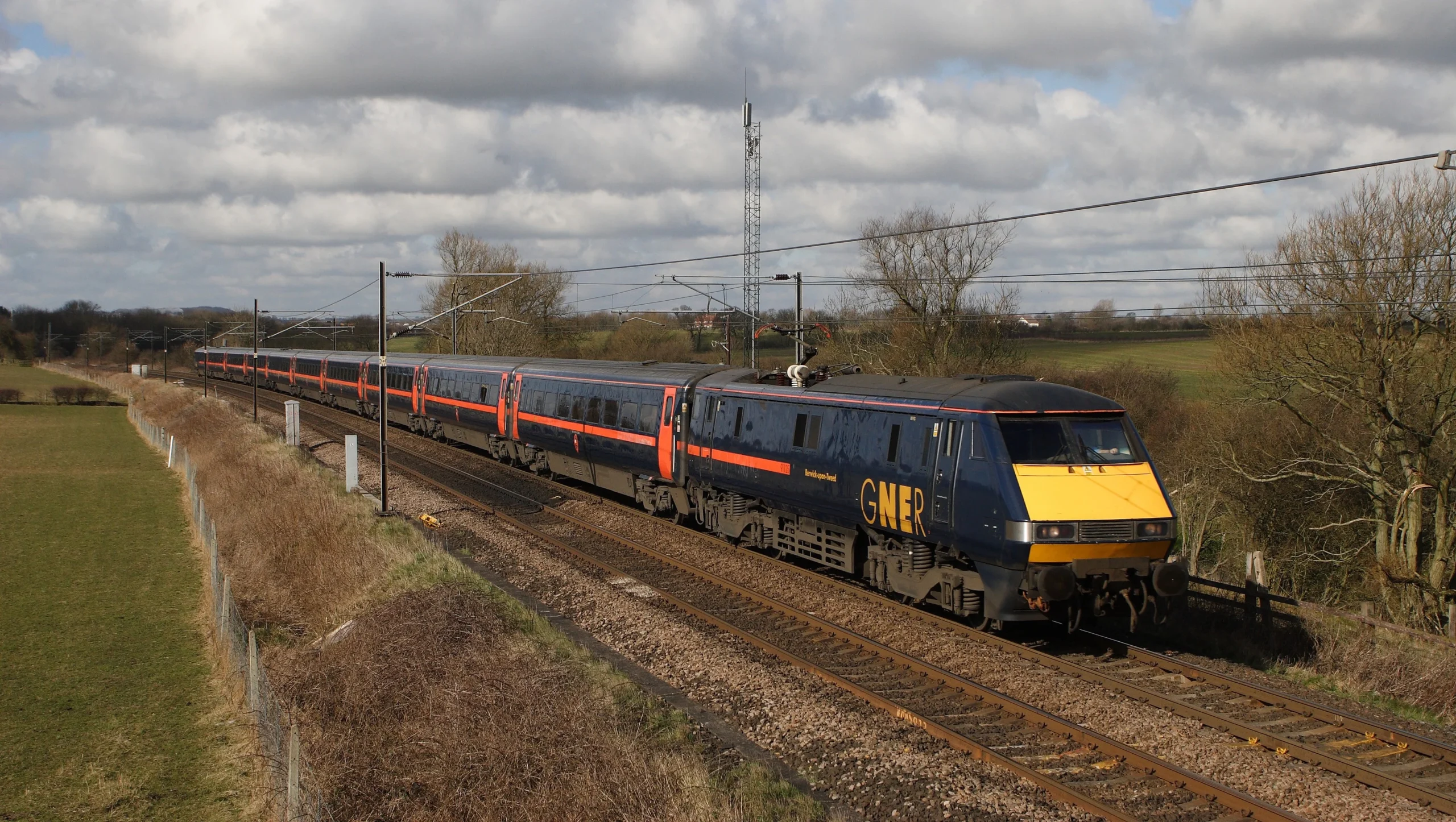
GNER is stripped of the ICEC franchise, as it finds itself unable to meet agreed premium payments to the government. There are also concerns about financial problems at parent company Sea Containers. GNER continues to run services under a management contract for another 12 months, however, while the Department for Transport (DfT) tenders for a new operator.
Picture: with only a few months of GNER operation remaining, 91125 “Berwick-upon-Tweed” passes Ricknall Grange with the 0700 London King’s Cross to Glasgow Central on Friday 23rd March 2007. IAIN HARDIE
December 2007
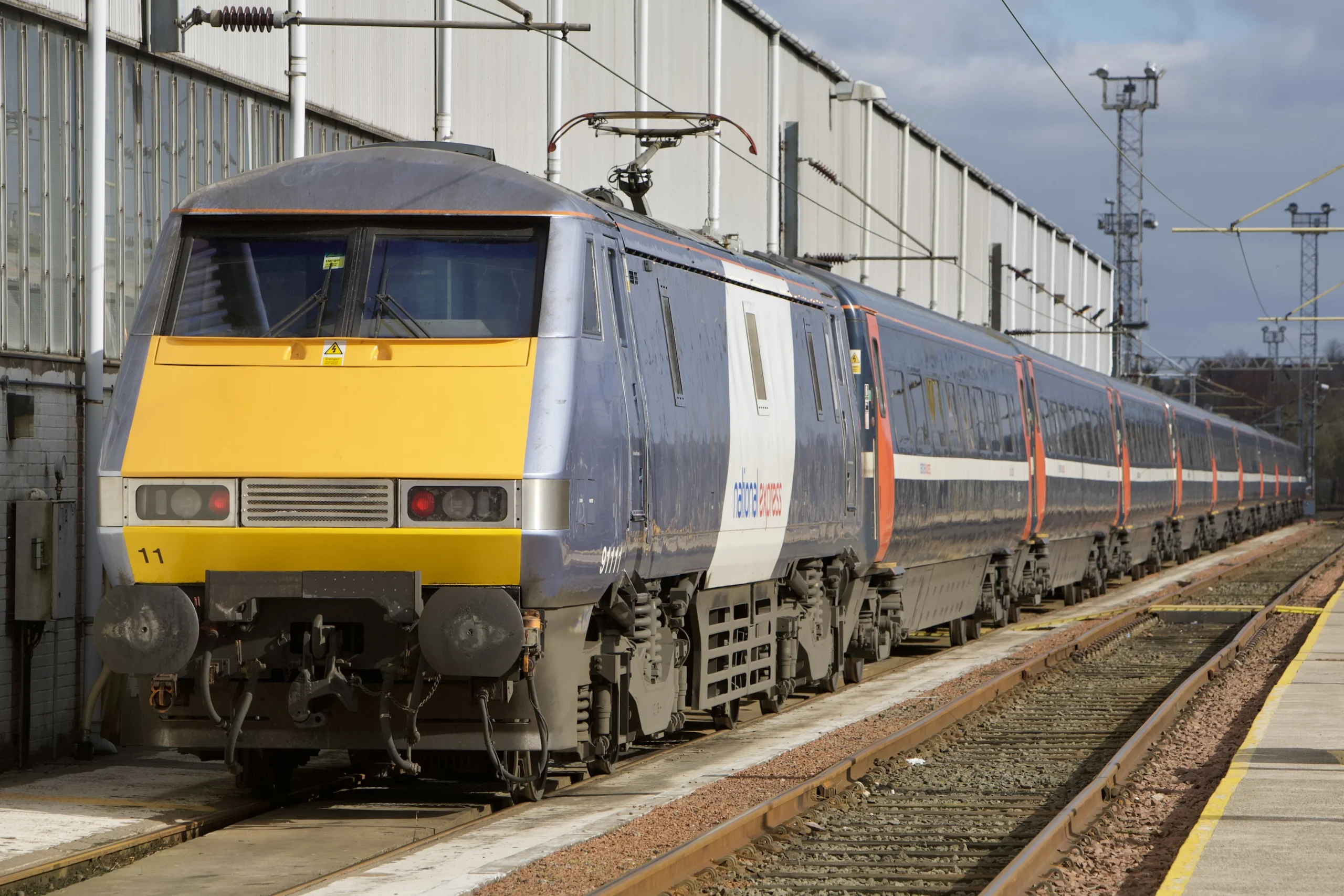
National Express Group wins the ICEC franchise and its subsidiary, National Express East Coast (NXEC), takes over services on Sunday 9th December 2007. The new operator quickly revises the livery on its trains, with a white bodyside stripe replacing the red one applied by GNER. Like its HSTs, NXEC plans to paint the InterCity 225 fleet in a new silver and white livery, but only one Class 91 locomotive receives the colours before the company runs into financial difficulties.
Picture: 91111, the only Class 91 to be painted in National Express silver and white livery, awaits its next duty at Polmadie depot on Saturday 28th March 2009. ROBIN RALSTON
November 2009
With National Express Group refusing to provide financial support, NXEC surrenders the ICEC franchise after failing to re-negotiate the terms. Services are brought under government control from Saturday 14th November 2009, with Directly Operated Railways (a company formed by the DfT as operator of last resort) trading as East Coast (EC). In summer 2010, InterCity 225s start to appear in a metallic silver livery featuring a mauve bodyside stripe and centrally located brand name. From early 2011, however, silver is replaced by light grey to reduce costs.
Picture: clearly showing the difference between East Coast silver and grey, 91109 “Sir Bobby Robson” approaches Colton Junction with the 1700 London King’s Cross to Edinburgh on Tuesday 4th June 2013. ANDY BROWN
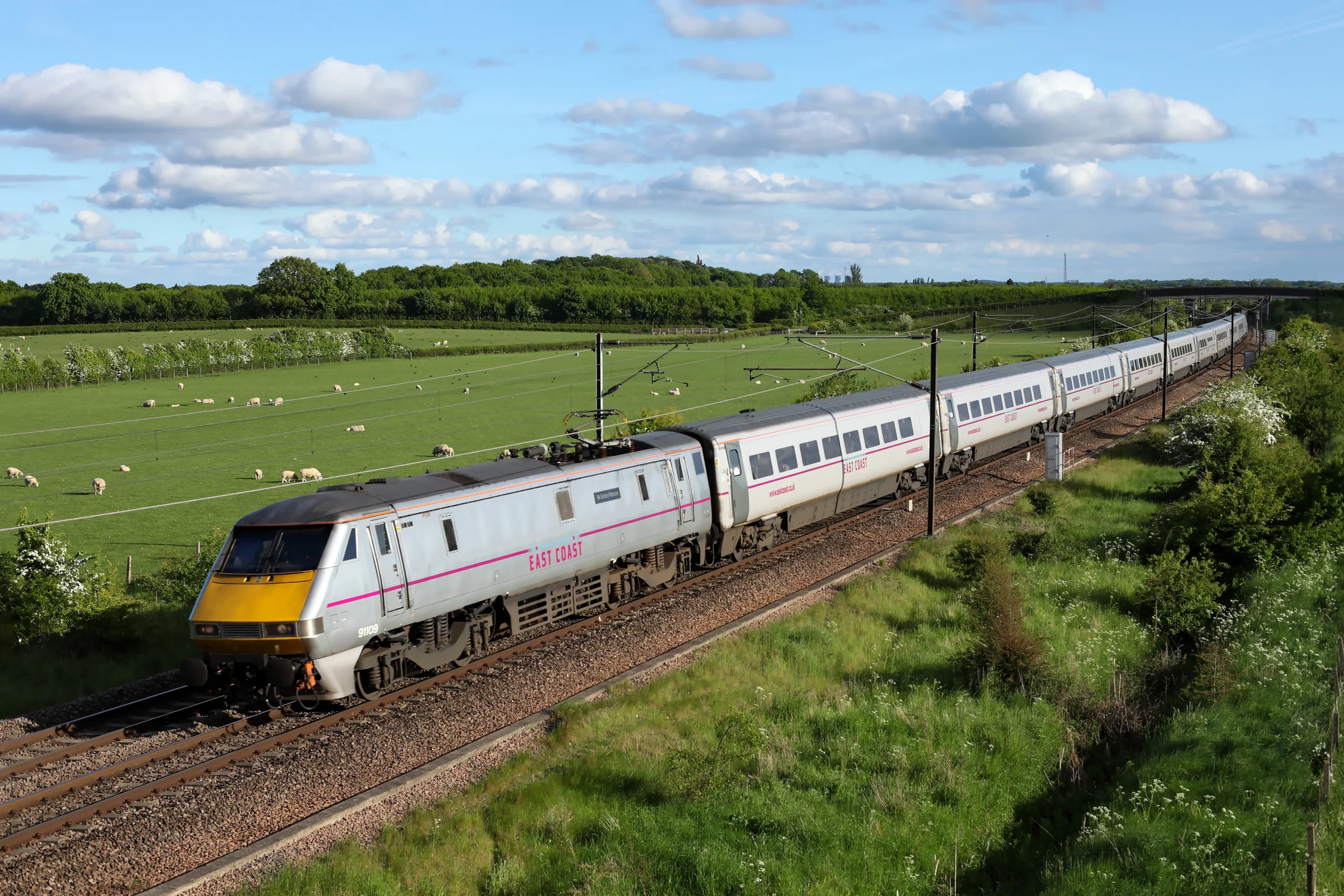
May 2011
EC launches the Eureka timetable, which is the biggest recast of ECML operations for 20 years, with more services, reduced journey times and improved catering. At the same time, Intercity 225s start running services to/from Skipton following an upgrade to the power supply in the Bingley area. Glasgow services, however, are cut from two-hourly to one in each direction on Mondays to Fridays, one southbound on Saturdays and one northbound on Sundays.
July 2012
The government announces an order with Hitachi for a fleet of new Class 800 series AT300 trains to replace HSTs on the East Coast and Great Western Mainlines. A year later, in July 2013, an option for a further 270 vehicles is taken up to replace the InterCity 225s. They’re expected to enter service in December 2018.
March 2015
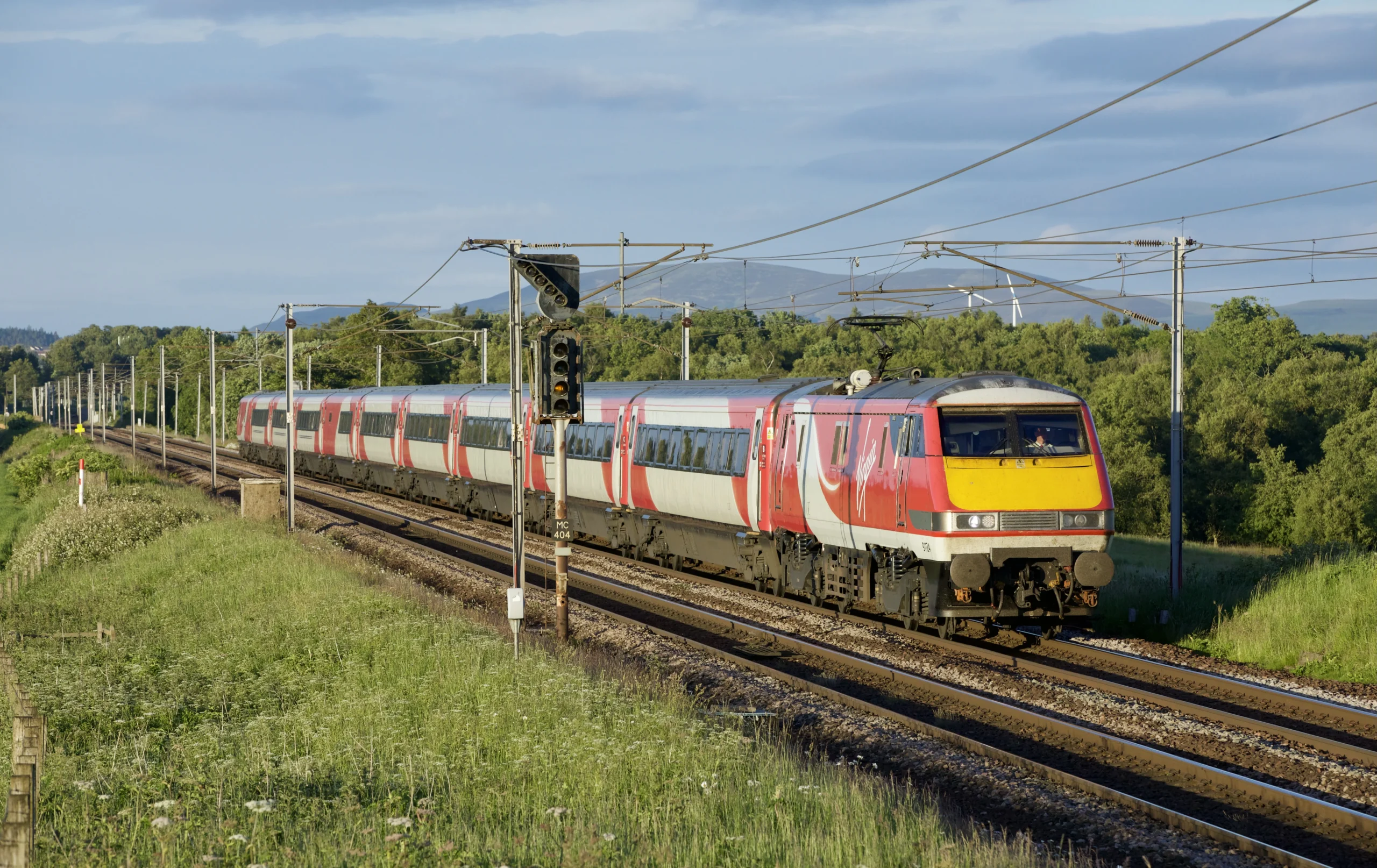
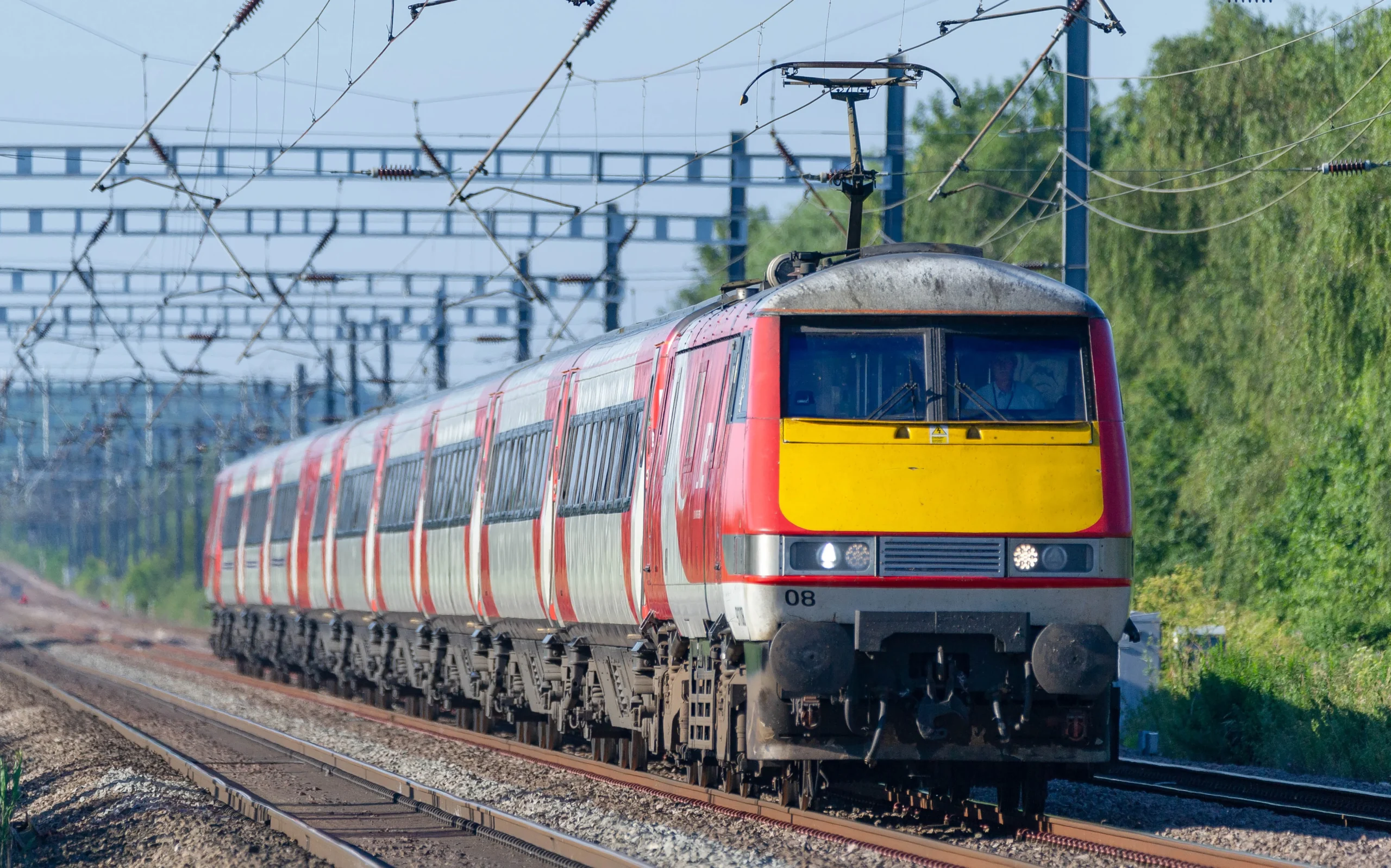
The ICEC franchise is awarded to InterCity Railways, a partnership between Stagecoach and Virgin. It takes over on Sunday 1st March 2015, operating as Virgin Trains East Coast (VTEC). The following day, 91124 and a full Mark 4 set are unveiled in a new red and white livery (applied as vinyl rather than paint) before working the 1100 London King’s Cross to Edinburgh.
Picture: 91124, the first Class 91 to receive the VTEC red and white livery, passes Ravenstruther with a service from London King’s Cross to Glasgow Central on Friday 22nd June 2018. ROBIN RALSTON
June 2018
VTEC suffers the same financial fate as previous ICEC franchisees and from Sunday 24th June 2018 operations return to government control, this time with London North Eastern Railway (LNER).
May 2019
The first of the new Class 800 series trains, branded ‘Azumas’ by VTEC, enters passenger service on Wednesday 15th May 2019. As a result, InterCity 225s start to be withdrawn. 91108 is the first Class 91 locomotive to be stood down – its last working is the 1833 London King’s Cross to Bradford Forster Square on Tuesday 30th July 2019. It then moves to Doncaster Works to provide parts for its classmates.
Picture: during its final month of ECML service, on Friday 5th July 2019, 91108 passes Conington Fen on route from London King’s Cross to Edinburgh. FRASER PITHIE
September 2019
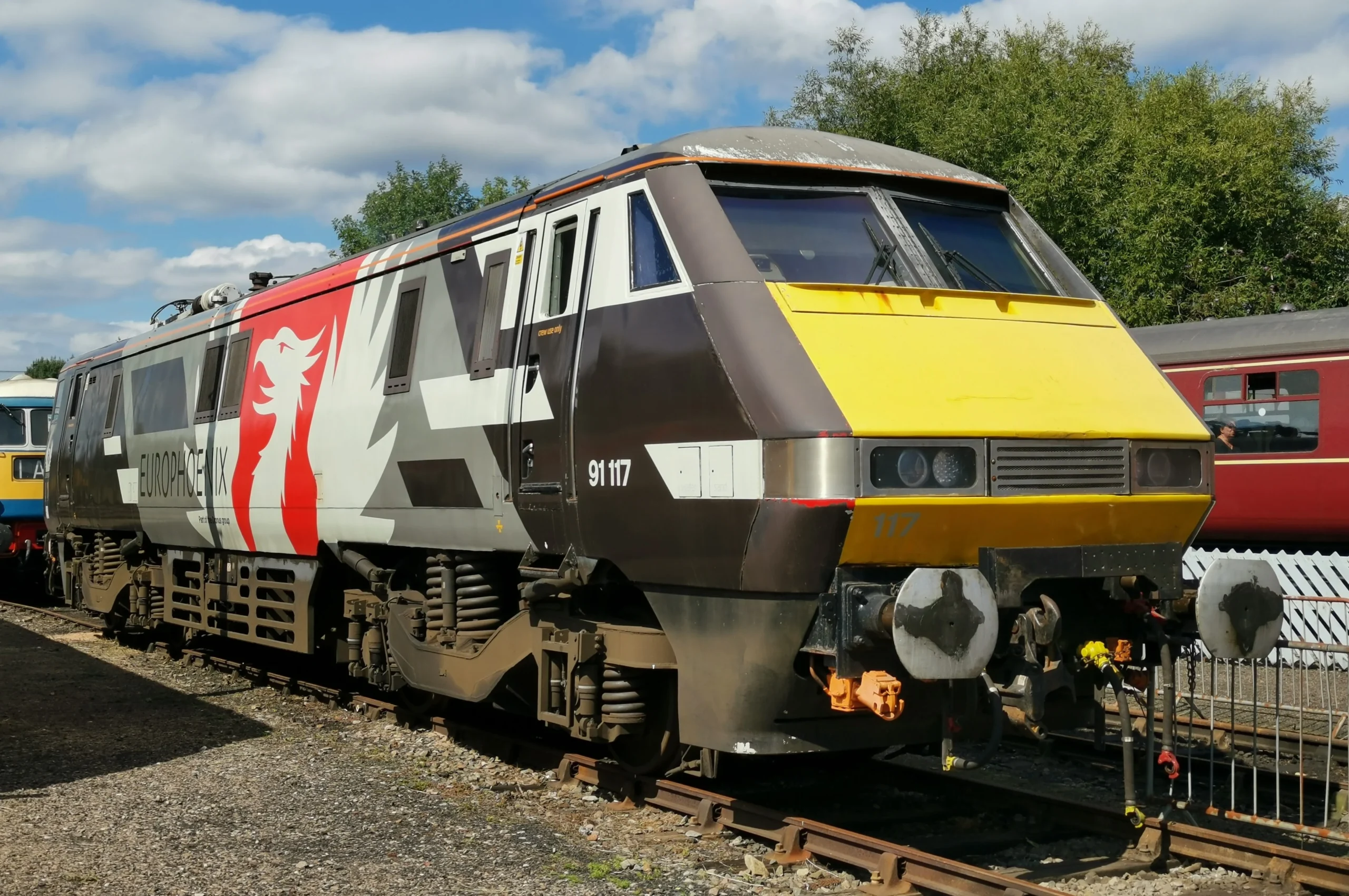
Europhoenix acquires two Class 91 locomotives, 91117 and 91120, for export to eastern Europe. The company says that they’ll work as a pair, coupled back-to-back, on freight trains and, if successful, more exports will follow. Changing market conditions in the wake of the COVID-19 pandemic, however, mean that they remain in the UK.
Picture: 91117 stands on display at Barrow Hill Roundhouse’s 150+2 Celebration Gala on Friday 26th August 2022. PHIL PRECIOUS
November 2019
InterCity 225 breaks new ground in Scotland on Thursday 28th November 2019, when 91131 works the 1500 London King’s Cross to Stirling from Edinburgh. Over the next four months, the trains are used on up to two services to/from Stirling on Mondays to Fridays.
January 2020
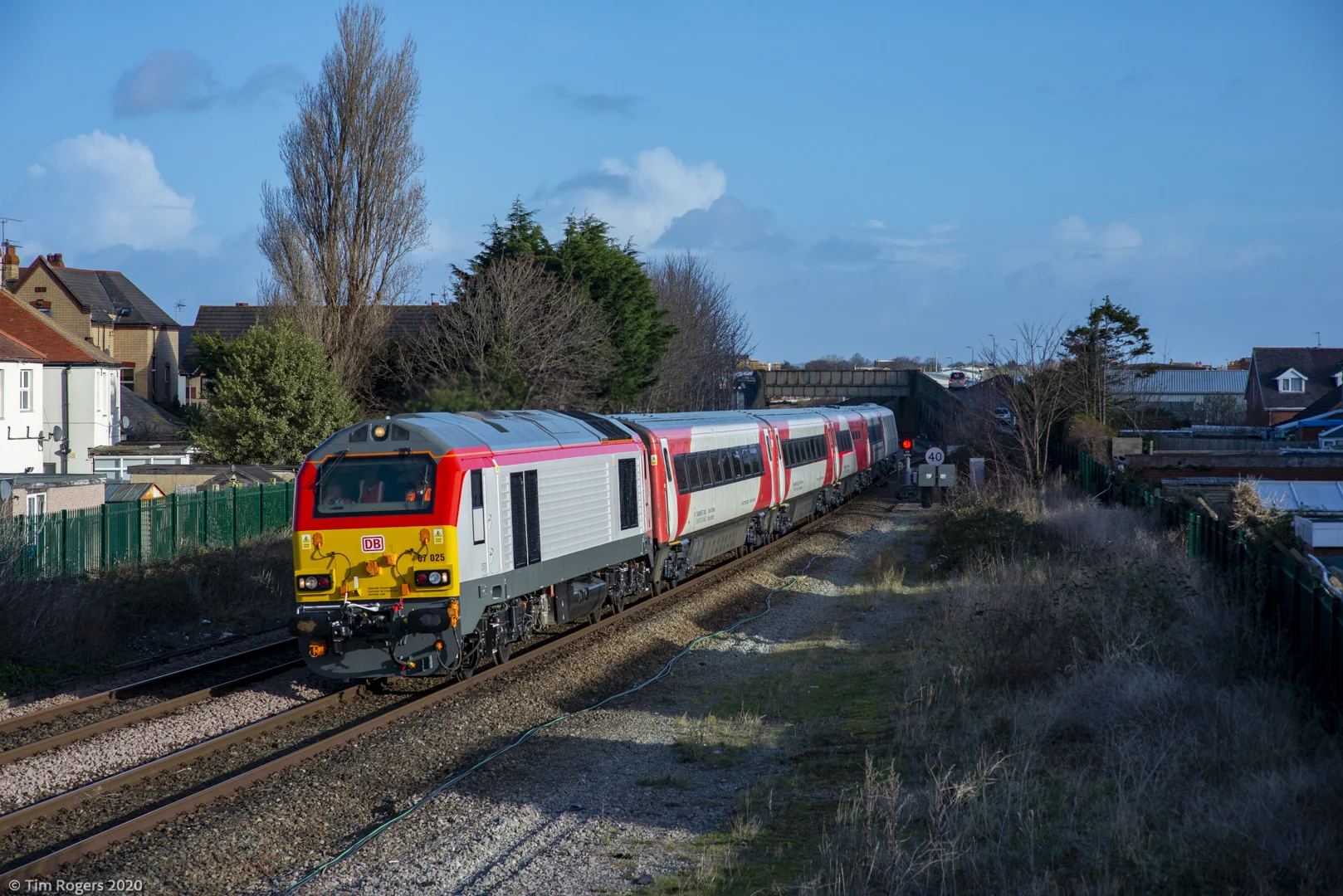
Transport for Wales (TfW) leases three short Mark 4 sets, each consisting of four coaches and a DVT, to replace Mark 3 vehicles on its ‘premier’ service between Holyhead and Cardiff Central. The Mark 4 sets are planned to work in push-pull mode with modified Class 67 diesel locomotives, and the first staff training runs take place along the North Wales coast on Tuesday 28th January 2020. TfW initially says that the Mark 4 fleet will enter service in May 2020, but this is ultimately delayed by the COVID-19 pandemic.
Picture: 67025 leads a staff training run from Crewe Carriage Sidings to Holyhead through Rhyl on Tuesday 28th January 2020. TIM ROGERS
February 2020
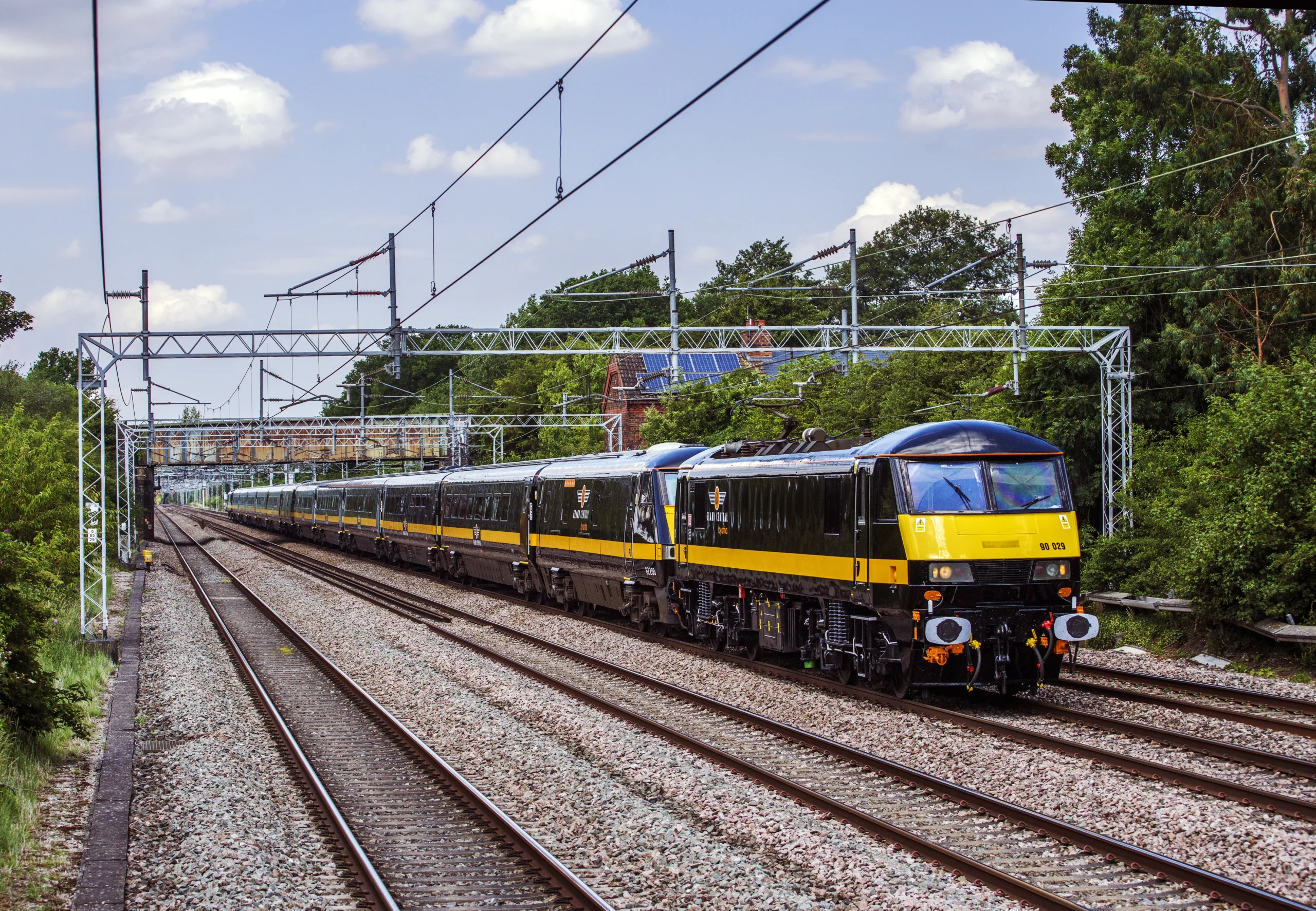
Sunday 16th February 2020 sees the last InterCity 225 service to Glasgow – 91110 “Battle of Britain Memorial Flight” working the 1626 London King’s Cross to Glasgow Central from Edinburgh. The train returns south the following day as the 0648 Glasgow Central to London King’s Cross. Grand Central (GC) announces that it's leasing four Mark 4 sets, each formed of five coaches and a DVT, to work with Class 90 locomotives on a new service between Blackpool North and London Euston. The sets are to be refurbished by Alstom at Widnes.
Picture: 90029 leads two newly refurbished GC Mark 4 sets (and 90026) along the WCML at Cathiron on Friday 26th June 2020. ANDY FLOWERS
September 2020
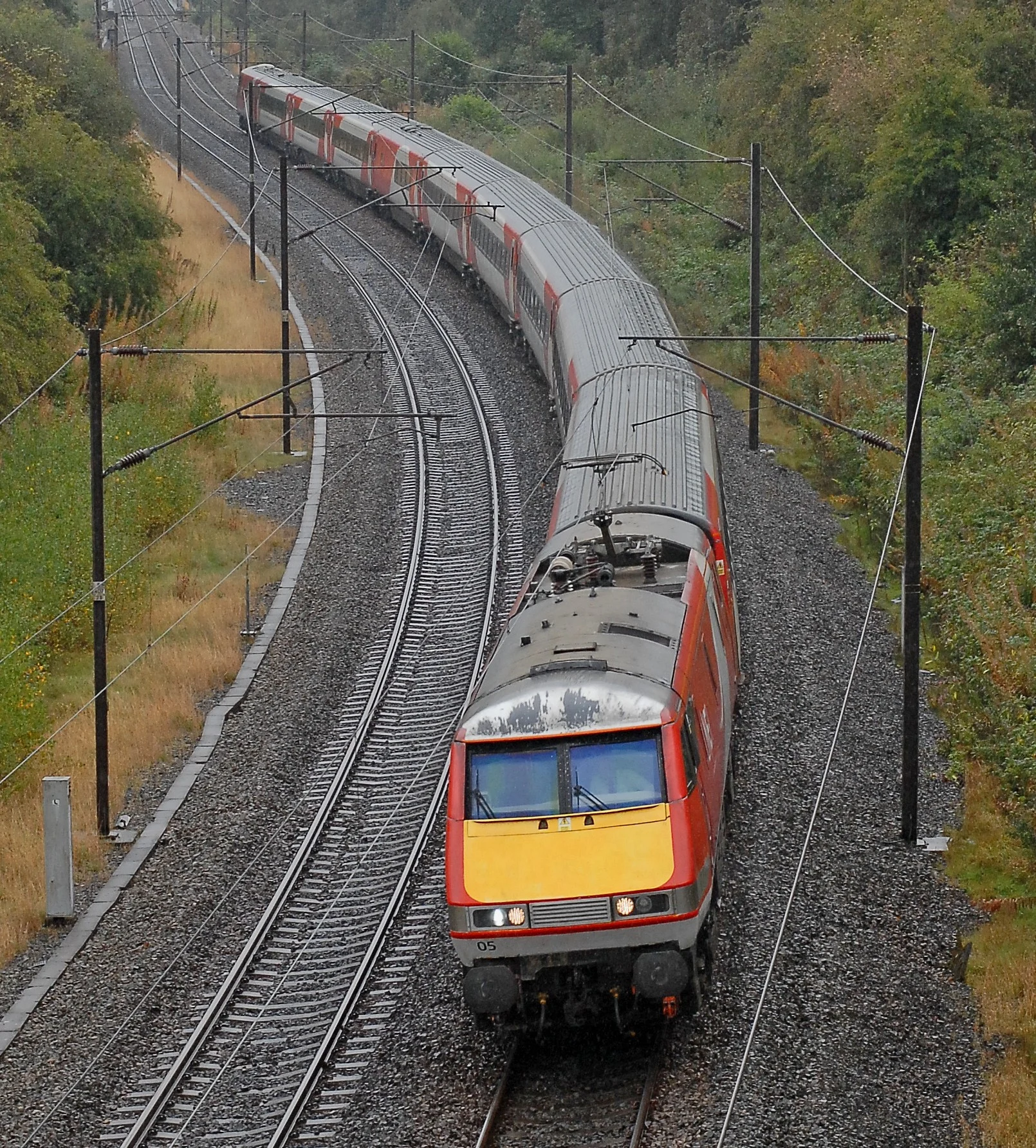
GC abandons its plans to operate services between Blackpool North and London Euston due to the impact of the COVID-19 pandemic on the economy and travel patterns, rendering its Mark 4 fleet redundant. LNER confirms that it's retaining a small fleet of InterCity 225s to support the Hitachi Class 80X ‘Azumas’ on services from London to Leeds, York, Bradford and Skipton while it procures more trains. The fleet is initially made up of 12 Class 91 locomotives and seven Mark 4 sets, but an eighth later returns to service to add contingency. On Thursday 24th September 2020, 91105 works what are expected to be the last InterCity 225 services north of York – the 0830 London King’s Cross to Edinburgh and the 1400 Edinburgh to London King’s Cross.
Picture: 91105 passes Stone Bridge near Durham with the 0830 London King’s Cross to Edinburgh on Thursday 24th September 2020. STEPHEN PORRETT
January 2021
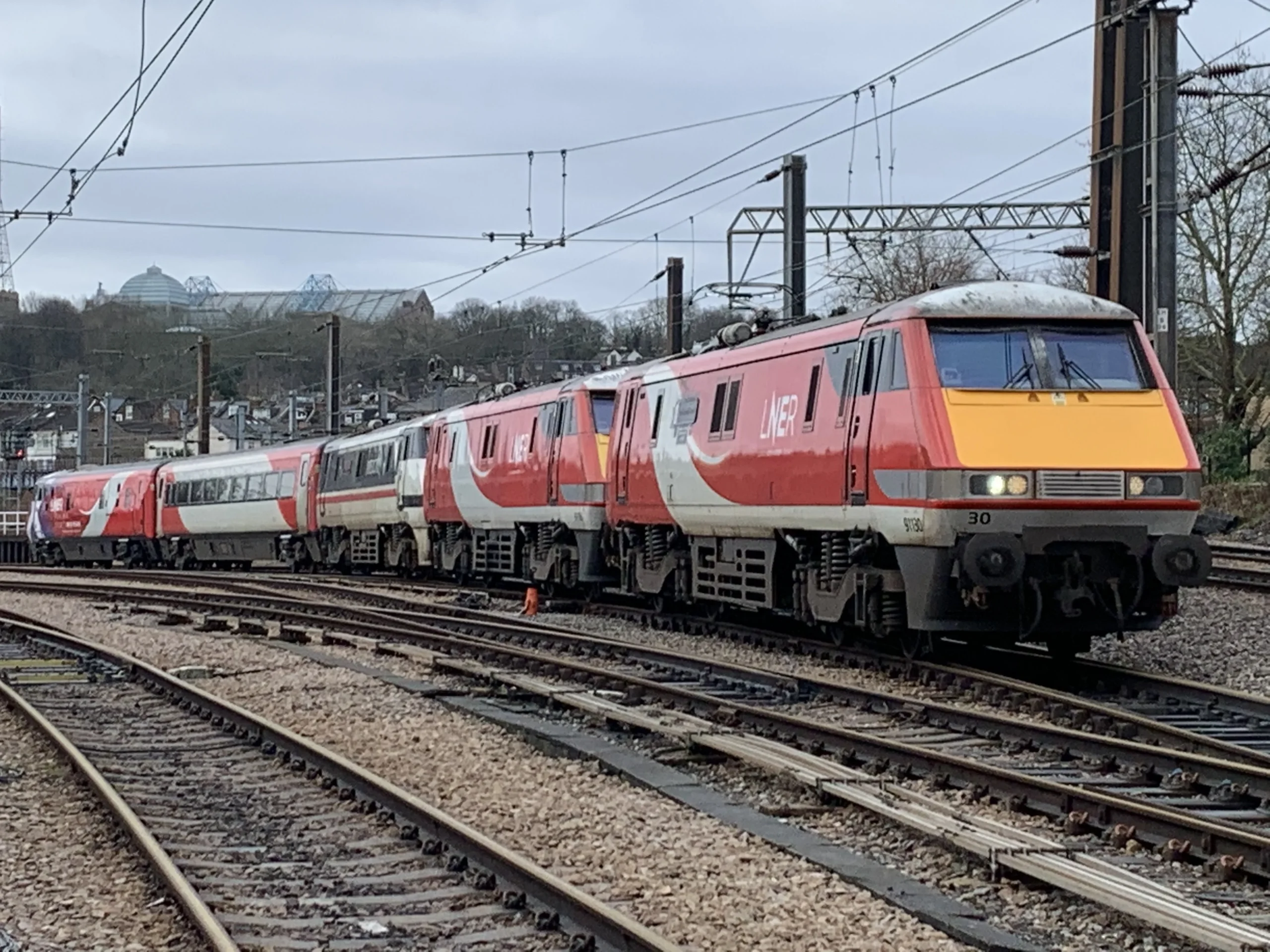
Maintenance of the LNER InterCity 225 fleet moves from Bounds Green to Neville Hill, ending a 33-year association with the north London depot. Meanwhile, the trains are temporarily withdrawn from passenger service, as a reduced timetable is in place due to COVID-19 and engineering work at London King’s Cross. They’re planned to re-enter traffic from Monday 7th June 2021, but faults with the Class 80X ‘Azumas’ mean that two sets return from Monday 11th May 2021.
Picture: the last InterCity 225 vehicles to leave Bounds Green – 91130 “Lord Mayor of Newcastle” hauls 91106, 91119 “Bounds Green InterCity Depot 1977-2017”, coach 12214 and DVT 82205 away from the depot on Thursday 28th January 2021. NICK DUDLEY
March 2021
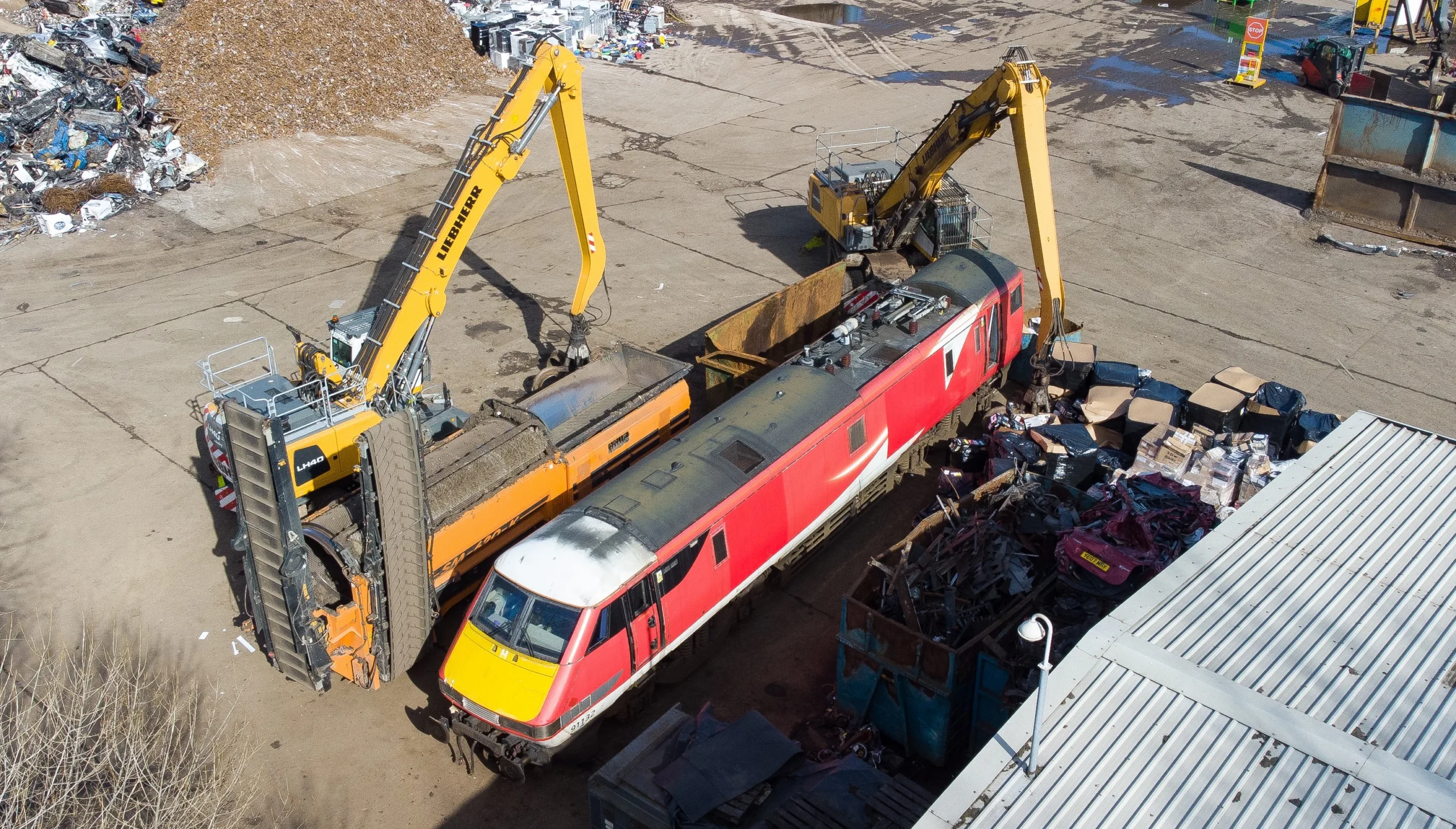
91132 becomes the first Class 91 locomotive to be scrapped, at Sims Metals in Beeston. Over the next three years, over half of the 31 locomotives that were built are scrapped – five in 2021, four in 2022, six in 2023 and one in 2024.
Picture: 91132 awaits its fate at Sims Metals in Beeston on Sunday 21st March 2021. STEVE DONALD
June 2021
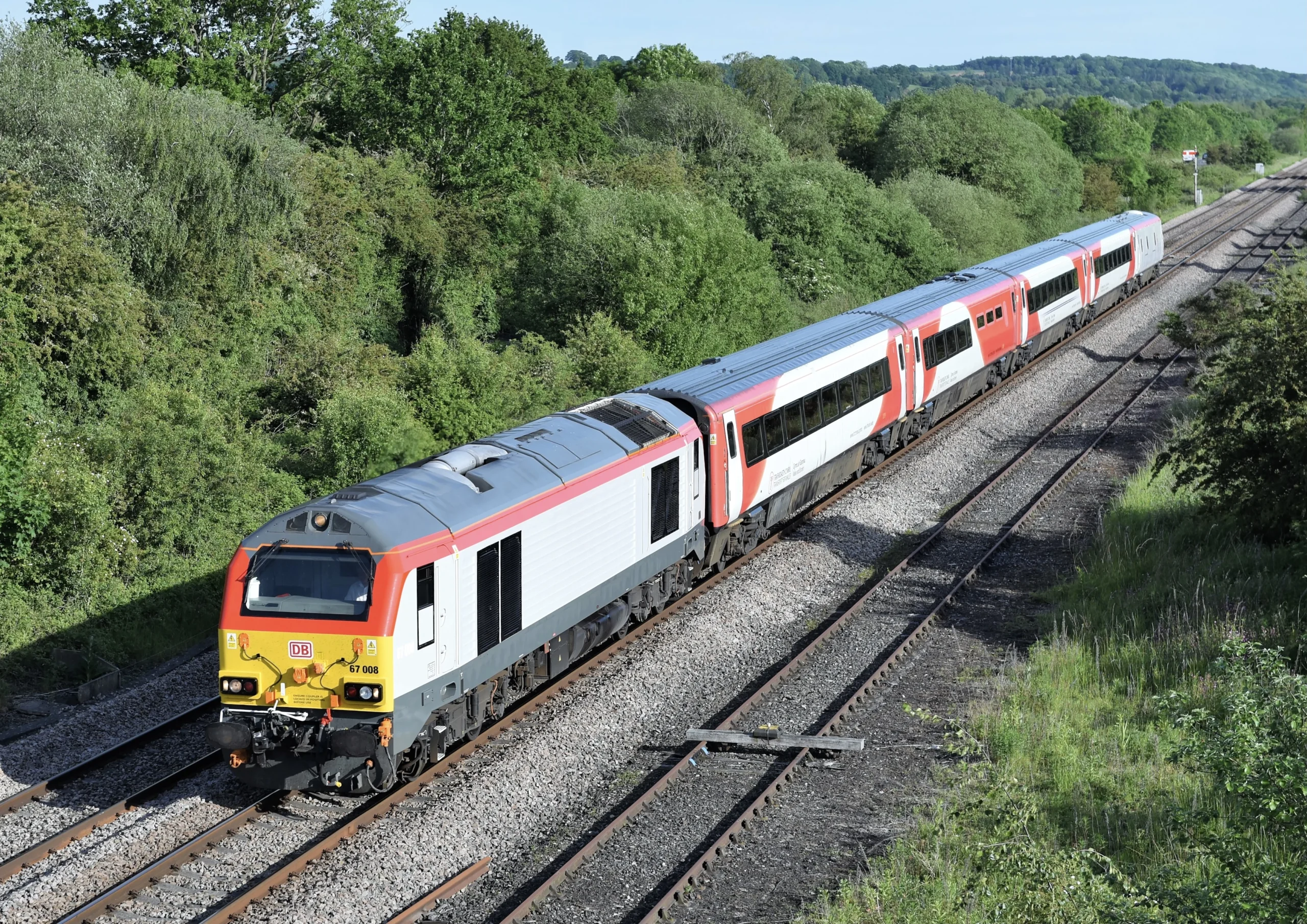
TfW starts using Mark 4 sets powered by Class 67 diesel locomotives on its ‘premier’ service between Holyhead and Cardiff Central. The Mark 4 fleet is larger than the Mark 3 fleet previously used, so operations are quickly expanded from one to three journeys in each direction on Mondays to Fridays. At the same time, TfW announces the acquisition of a further 30 Mark 4 vehicles (the four former GC sets plus six spare vehicles) to allow the existing sets to be extended and locomotive-hauled services to be introduced on its route between Manchester and South Wales.
Picture: 67008 passes Leominster with the 1716 Cardiff Central to Holyhead on Wednesday 8th June 2022. DAVE GOMMERSALL
June 2022
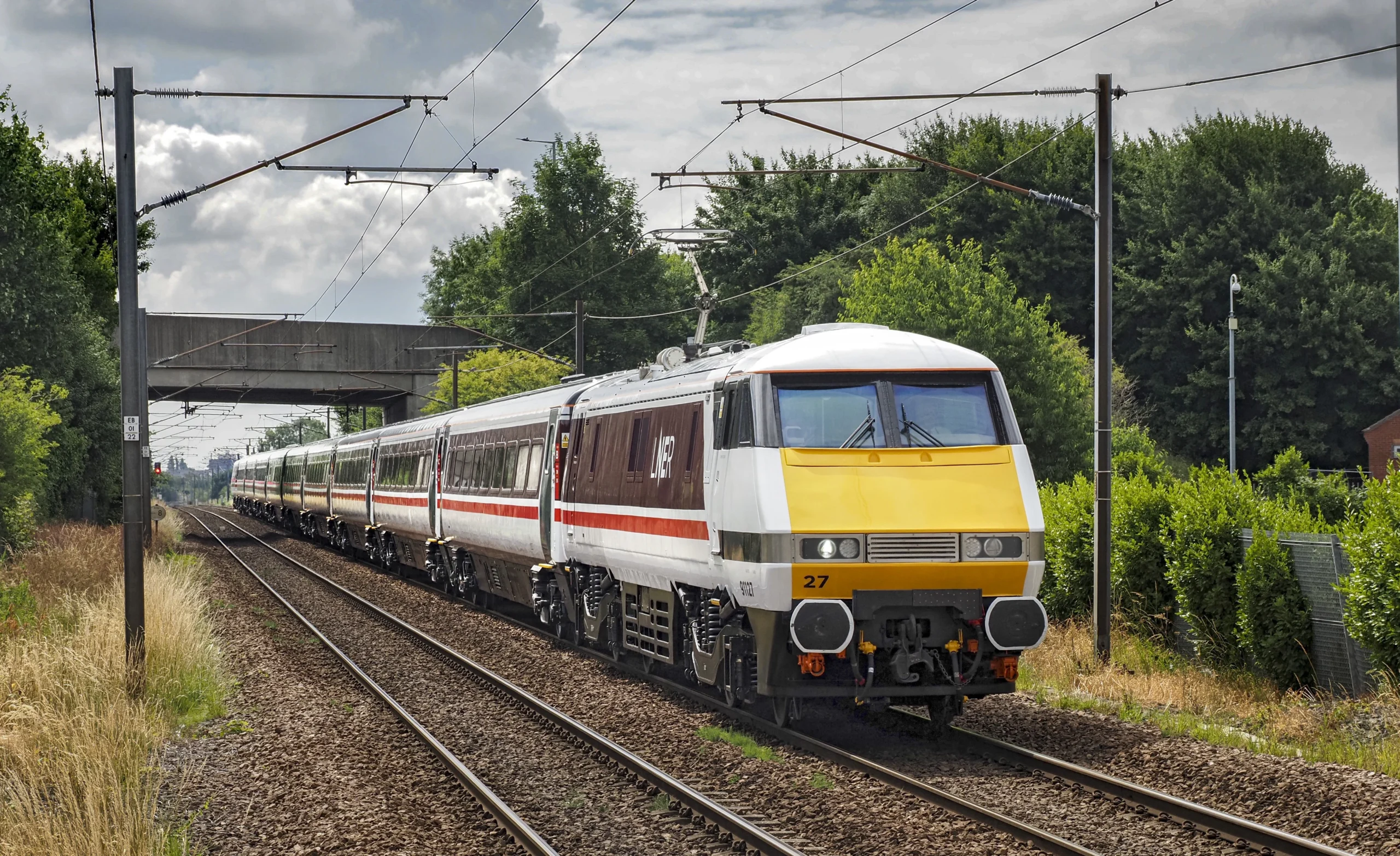
LNER unveils a new livery for its remaining InterCity 225s. Inspired by the original InterCity ‘Swallow’ livery that the trains carried when they were new, this features the company’s trademark colours of red, oxblood, grey and white. 91127 and Mark 4 set NL17, including DVT 82225, are the first to receive the new colour scheme.
Picture: passengers and railway enthusiasts get their first glimpse of the new livery on the mainline on Friday 1st July 2022, when 91127 moves the empty stock from Doncaster West Yard to Neville Hill. GEOFF GRIFFITHS
September 2022
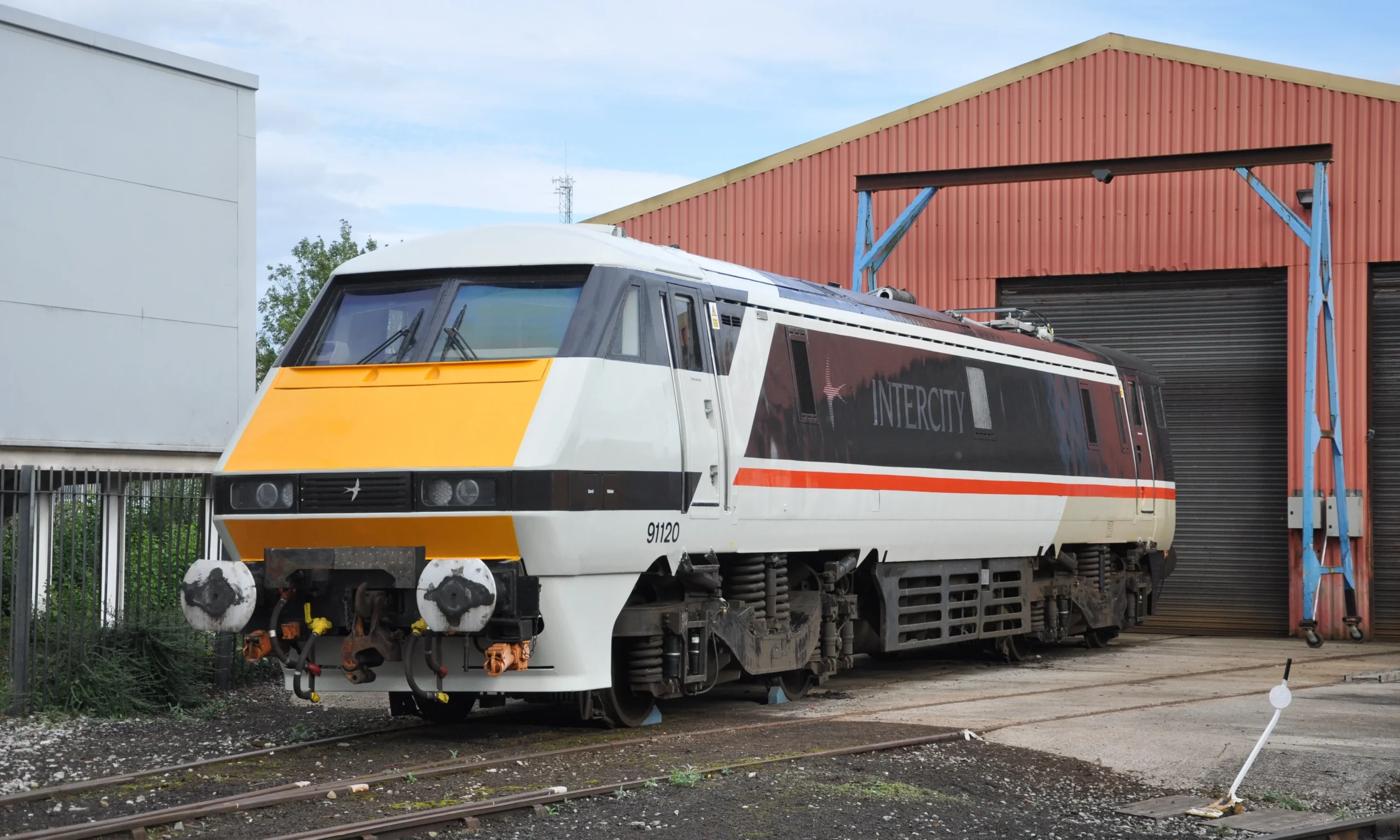
After a lengthy spell in storage, Europhoenix 91120 goes on long-term loan to the Crewe Heritage Centre, taking the locomotive back to the town where it was built. 91120 initially goes on display in Europhoenix colours, but over the next 12 months it's repainted in original InterCity ‘Swallow’ livery.
Picture: 91120 stands outside the workshop at Crewe Heritage Centre on Sunday 24th September 2023 after being repainted in InterCity 'Swallow' livery. CLIFF BEETON
January 2023
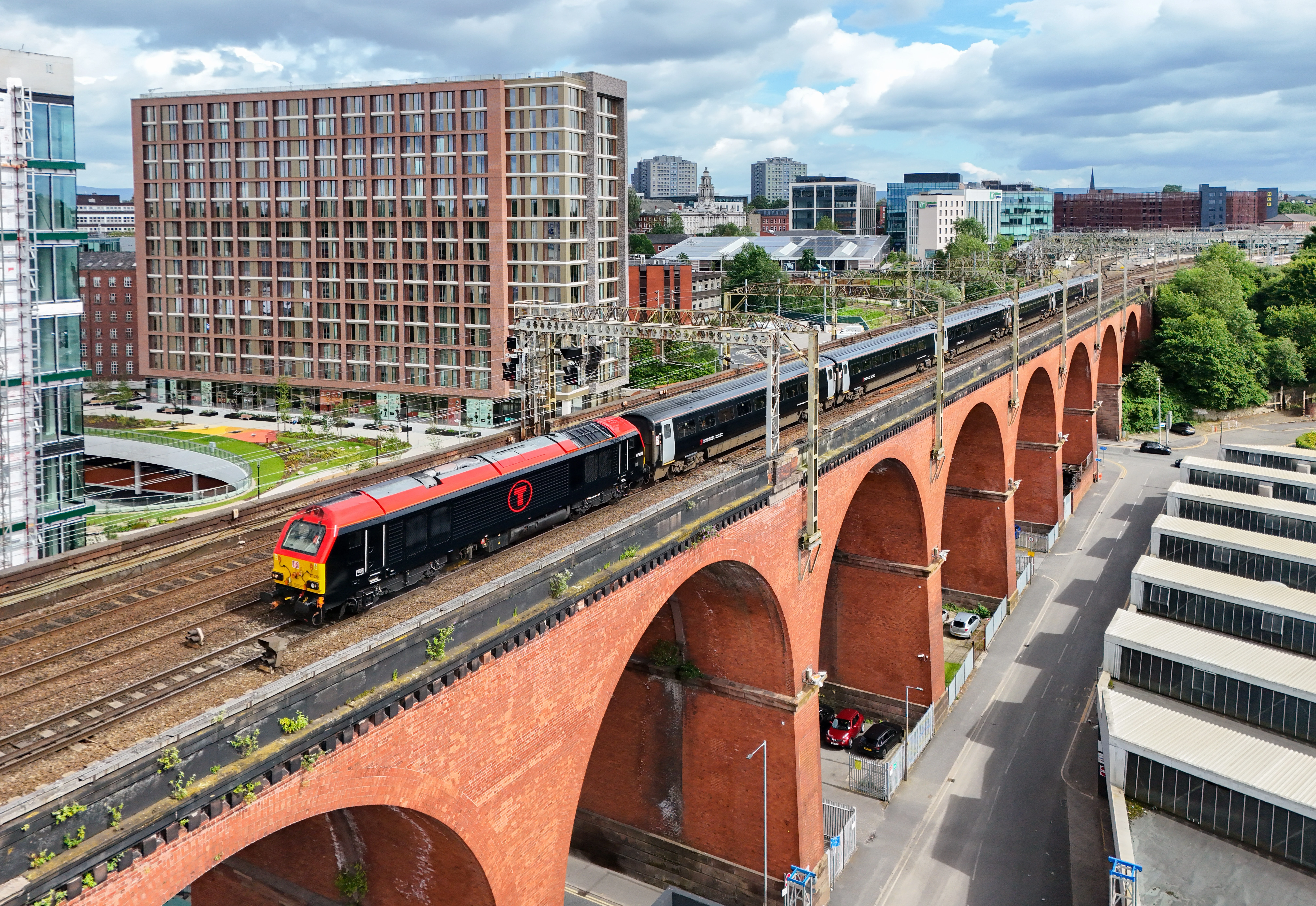
On Monday 9th January 2023, TfW launches Class 67s and Mark 4 sets on its route between Manchester and South Wales. At first, there are just two services in each direction on Mondays to Fridays, but operations are gradually ramped up. By summer 2025, locomotive-hauled trains are booked to work a regular pattern of two-hourly services between Manchester and South Wales on Mondays to Saturdays, plus one return journey between North and South Wales on weekdays.
Picture: 67020 leads one of the former Grand Central Mark 4 sets across Stockport Viaduct as the 1249 Cardiff Central to Manchester Piccadilly on Tuesday 2nd July 2024. TOM MCATEE
March 2023
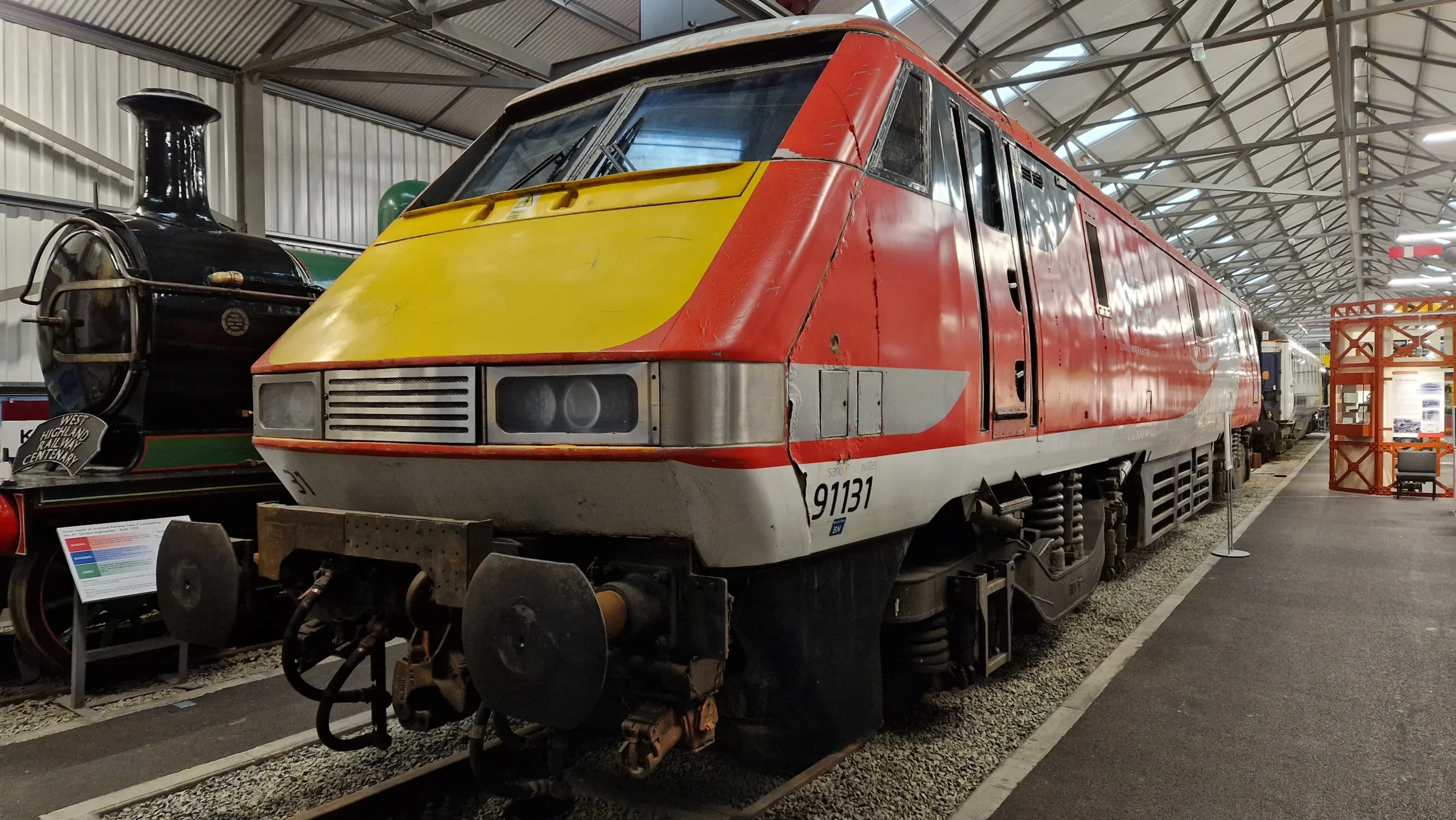
91131 becomes the first InterCity 225 vehicle to enter preservation, with the Scottish Railway Preservation Society at the Museum of Scottish Railways (MoSR) in Bo’ness. The locomotive was initially designated for preservation by the Railway Heritage Committee in July 1998, as the last one built at Crewe Works and then holder of the UK passenger speed record.
Picture: 91131 stands on display at the MoSR in Bo’ness on Saturday 14th October 2023. CHRIS CURTIS
November 2023
LNER announces that CAF will deliver ten new tri-mode trains to supplement its ‘Azuma’ fleet and allow the remaining Class 91 locomotives and Mark 4 sets to be withdrawn by the end of 2027.
August / September 2024
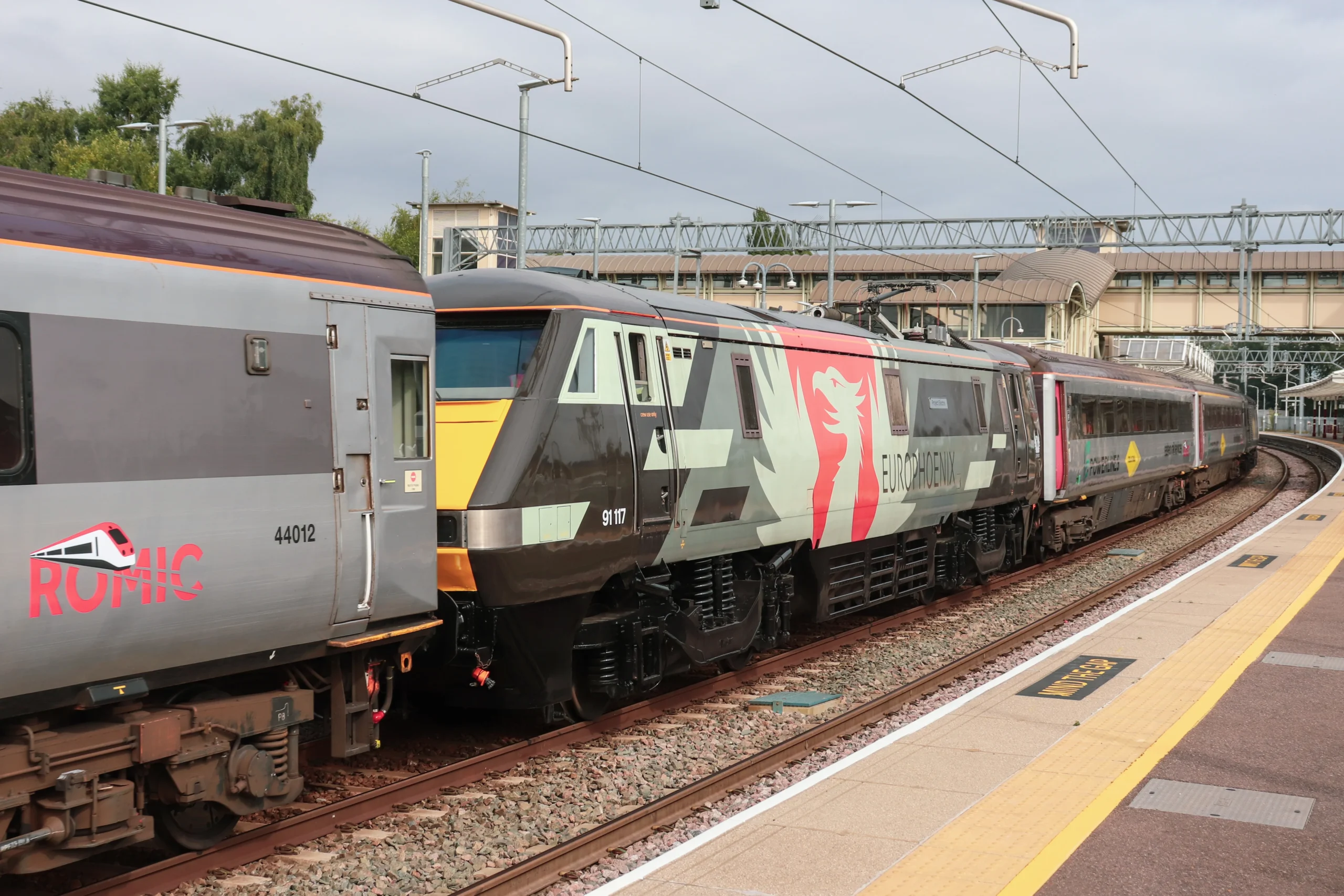
Europhoenix 91117, now named “Project Electra”, begins a new role in a special train put together to test and gather data about overhead line equipment. Its first assignment is on the newly electrified section of the Midland Mainline (MML) between Wigston and Kettering. This testing role would later take the locomotive to parts of the North TransPennine route and the Great Western Mainline where Class 91s had never previously operated.
Picture: 91117 “Project Electra” arrives at Kettering midway through a Leicester to Leicester via Bedford test run on Sunday 11th August 2024. ANDY HOLTON
May 2025
On Thursday 22nd May 2025, LNER holds its inaugural ’225 Day’, with 91106 named “Swallow InterCity 225 – Since 1989” to mark the fleet achieving nearly 40 years’ service on the ECML. At the same time, the operator reveals that work is still being done on the design of its new tri-mode trains and that plans are being made to extend the lives of the Class 91 locomotives and Mark 4 sets until the end of 2028.
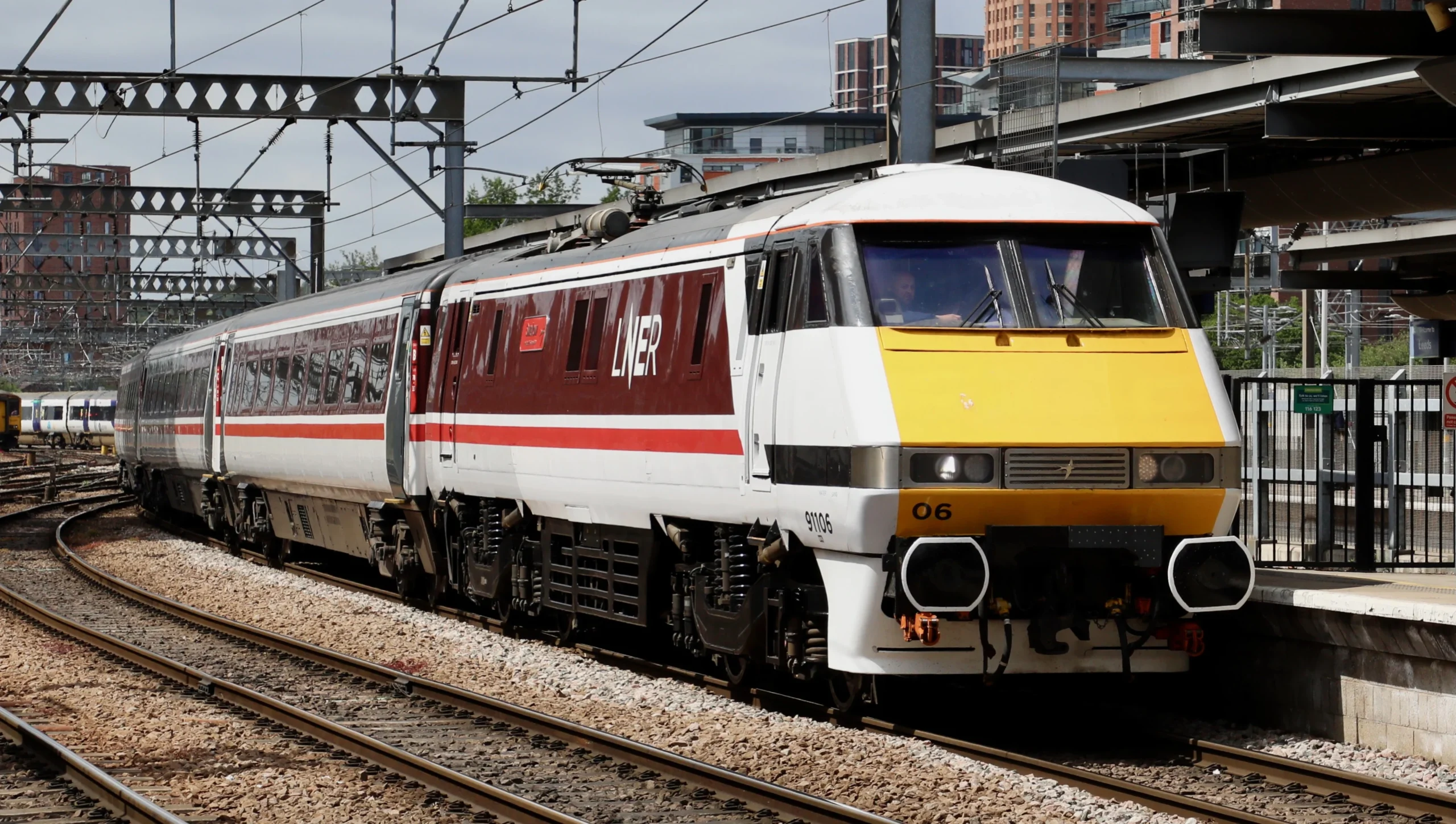
91106 "Swallow InterCity 225 – Since 1989" arrives at Leeds on '225 Day' Thursday 22nd May 2025. DAVE GILBERT
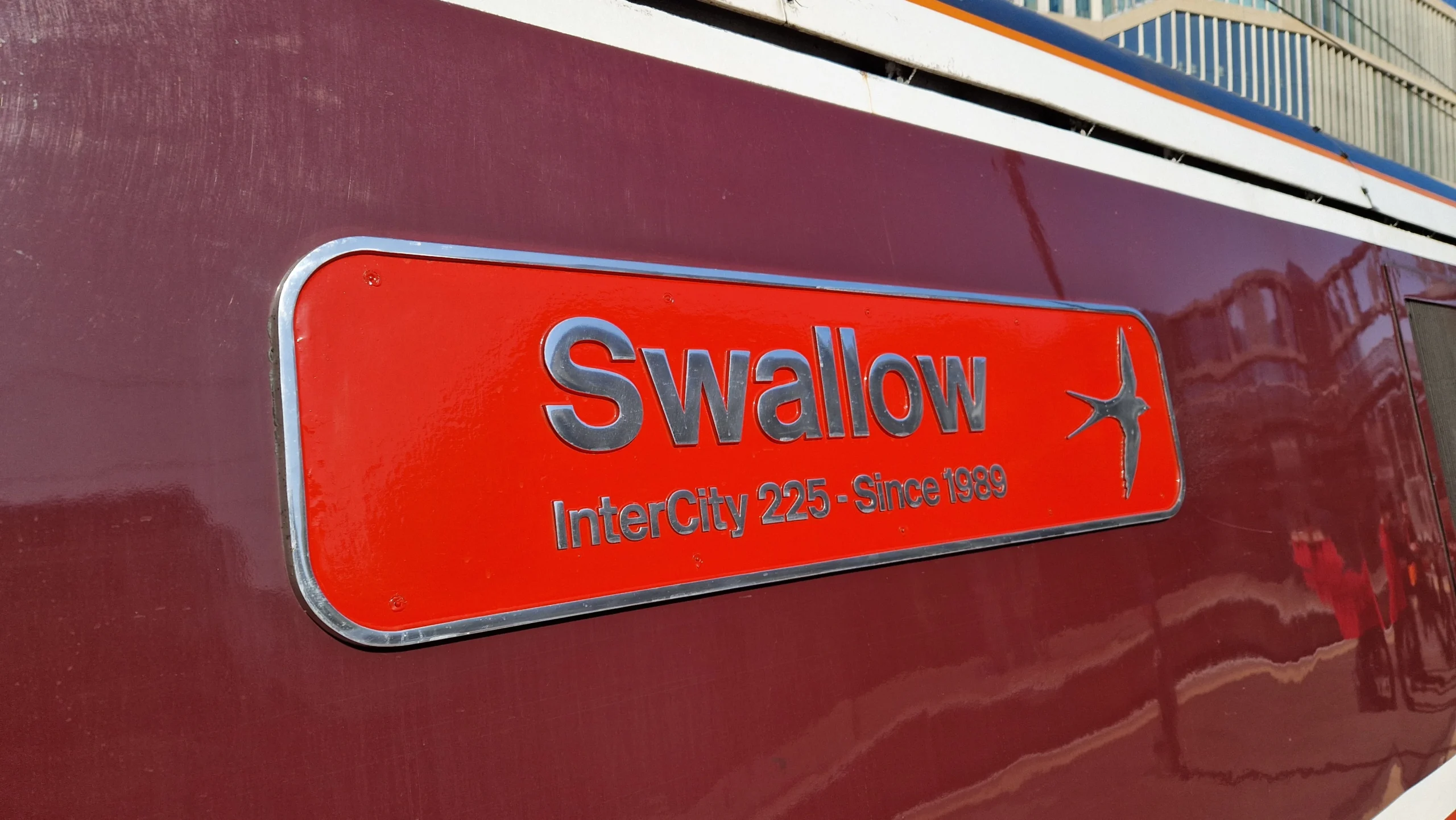
One of the new nameplates attached to 91106. CHRIS CURTIS
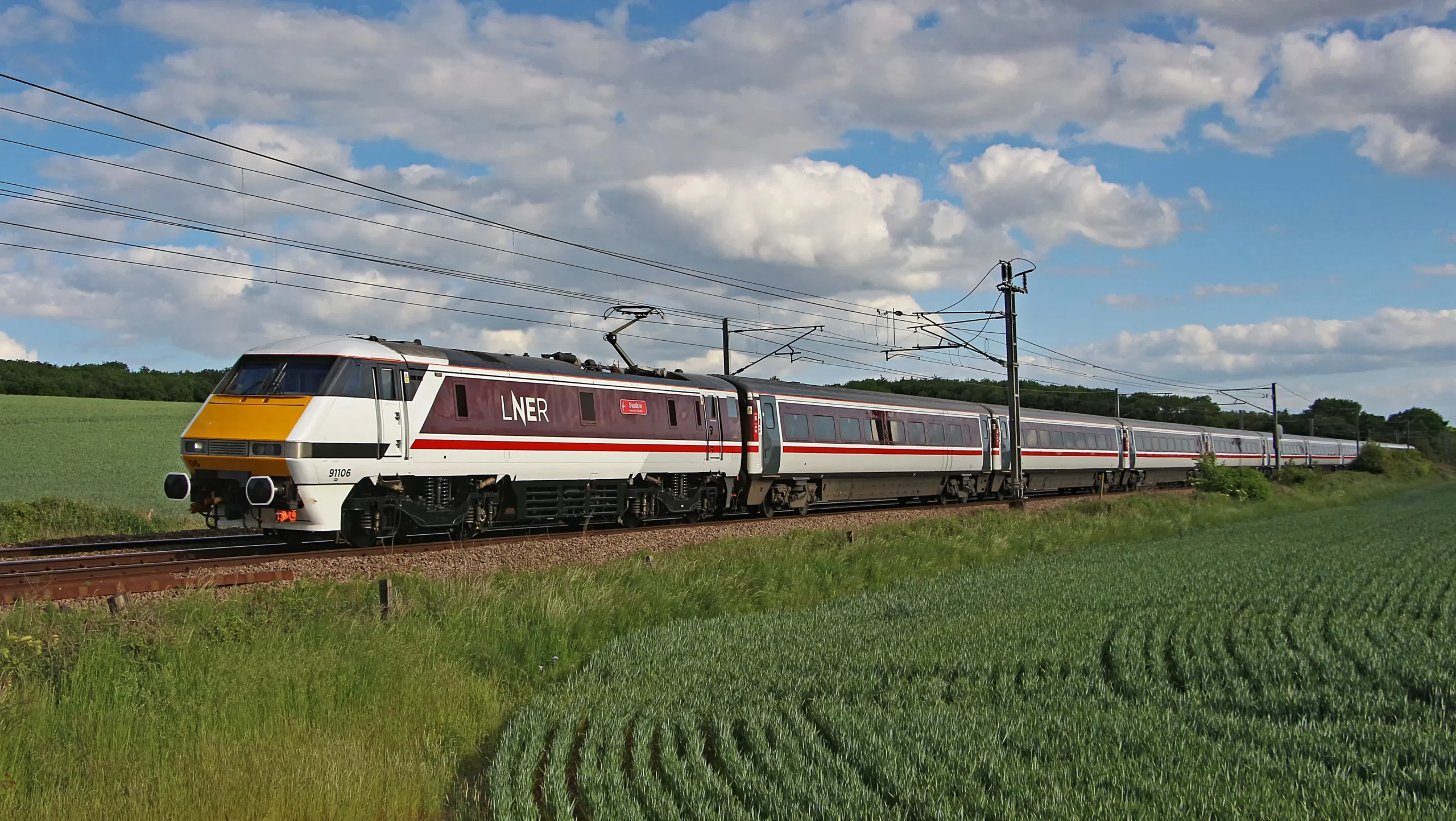
91106 “Swallow InterCity 225 – Since 1989” speeds past Eaton Lane, Gamston on ‘225 Day’ Thursday 22nd May 2025. GARETH GRIFFITHS
November 2025
LNER shortens its Mark 4 sets from nine to seven coaches. This is to allow the InterCity 225s to accelerate more quickly and better match the performance of the Class 80X ‘Azumas’ in a revised ECML timetable from December 2025.
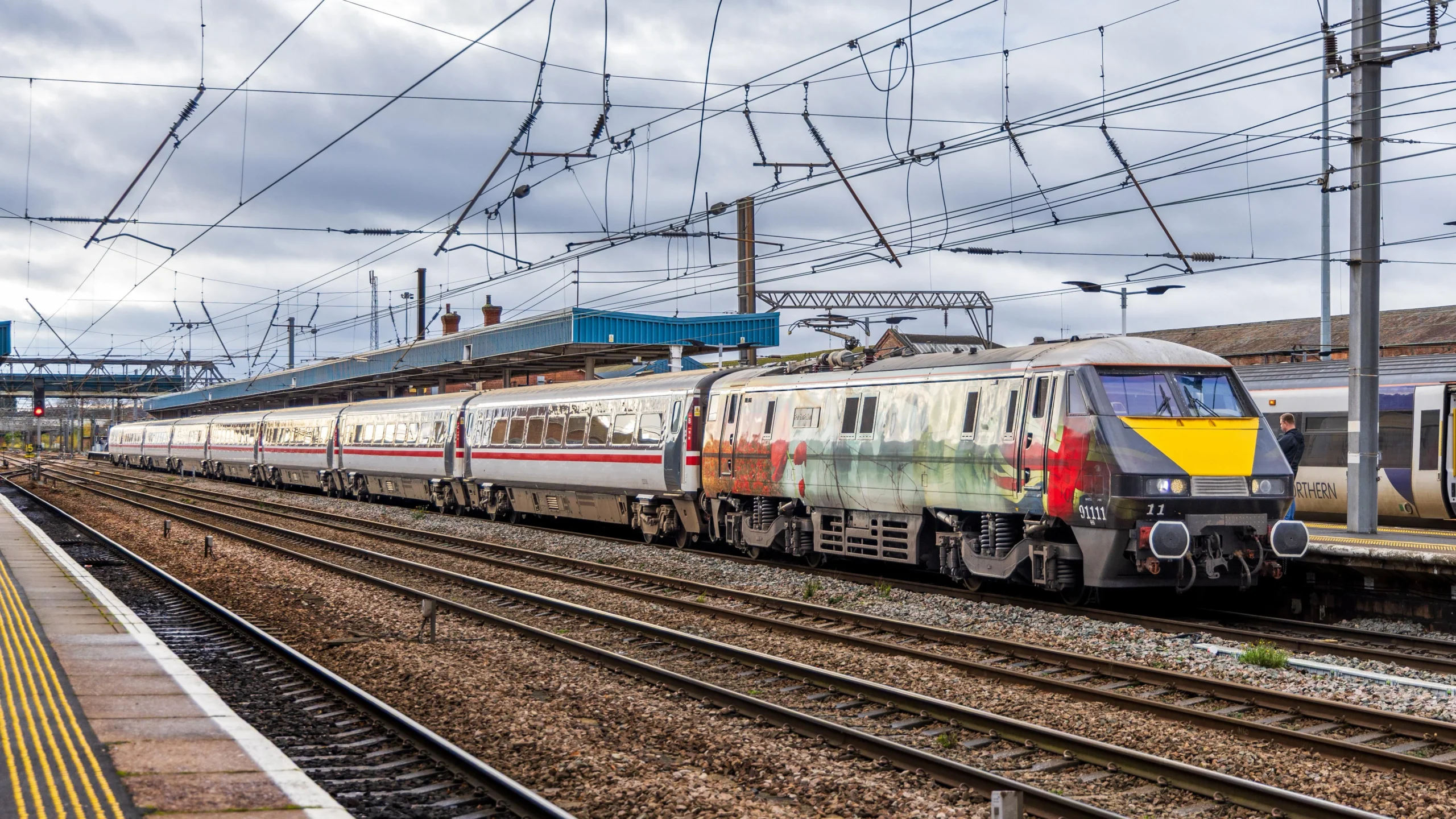
Picture: 91111 “For the Fallen” and set NL06, formed of seven coaches plus DVT 82208, pause at Doncaster with the 0906 London King’s Cross to York on Thursday 27th November 2025. DAN WRIGHT
March 2026
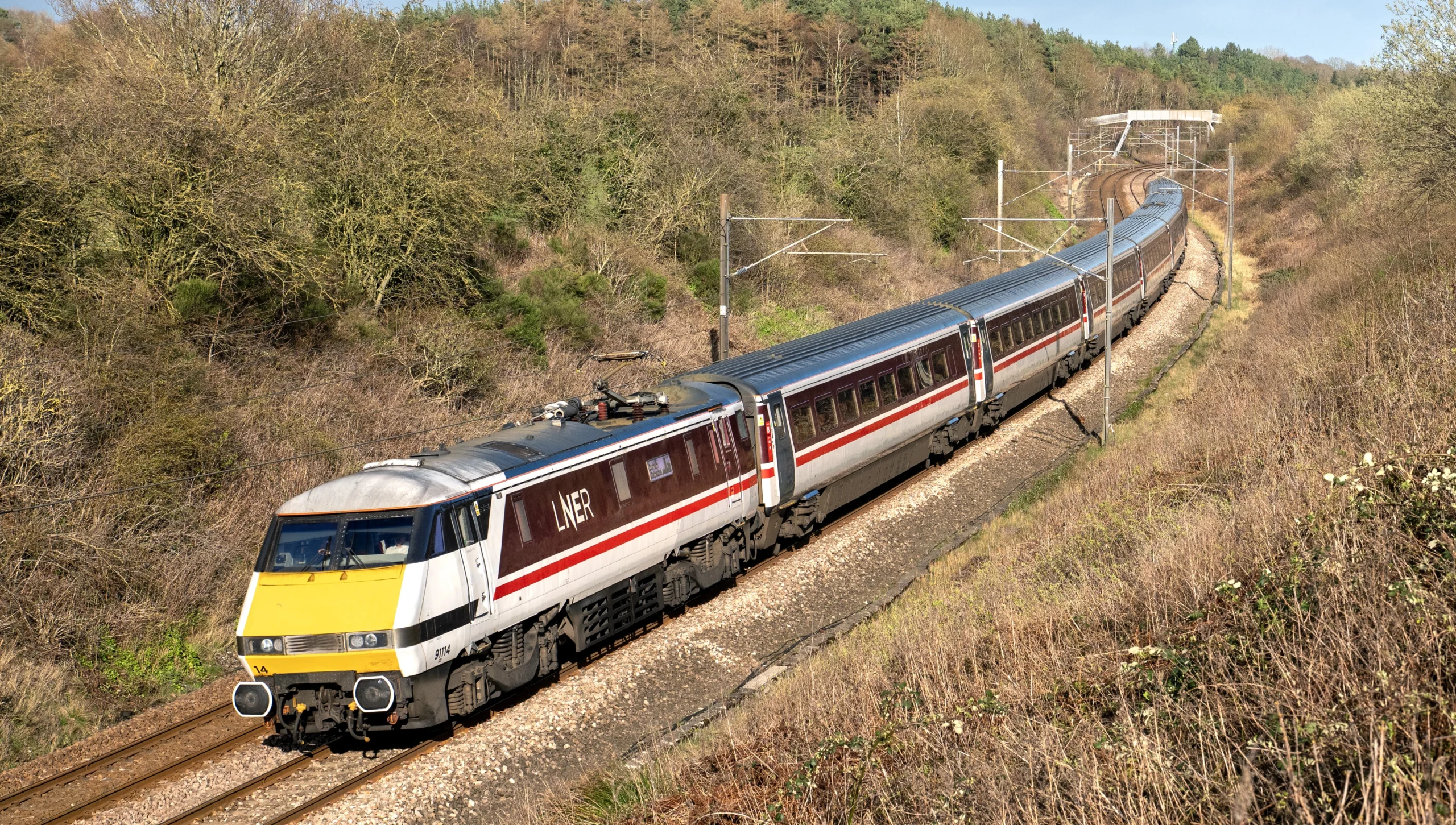
On Monday 30th March 2026, after an absence of five and a half years, InterCity 225s return to revenue-earning service north of York, with one return journey each day between London King’s Cross and Newcastle. 91114 “Durham Cathedral” works the first trains – the 1433 from London King’s Cross and the 1827 from Newcastle.
Picture: 91114 “Durham Cathedral” passes Sunderland Bridge, south of Durham, with the 1433 London King’s Cross to Newcastle on Monday 30th March 2026. STEPHEN MORRIS
The 225GROUP would like to thank everyone who has contributed pictures and information to this page. If you have any additional images or suggestions about how this page can be improved, please get in touch by email ([email protected]).
The InterCity 225 story continues. Will they reach 40 years on the ECML? Only time will tell!